


Hybrid Off Grid vs Hybrid On Grid: Choosing Your Solar Power Pathway
Table of Contents
Understanding Hybrid Solar Systems
Imagine having solar panels gleaming on your roof, batteries storing excess energy, and maintaining a connection to the traditional grid. That's the magic of hybrid systems! But here's where homeowners across Europe face a crossroads: should you choose hybrid off-grid or hybrid on-grid? I've seen this confusion firsthand during my 10 years designing solar solutions. Both configurations blend solar generation with battery storage, but their relationship with the utility grid creates fundamentally different energy experiences. Let's unravel this puzzle together.
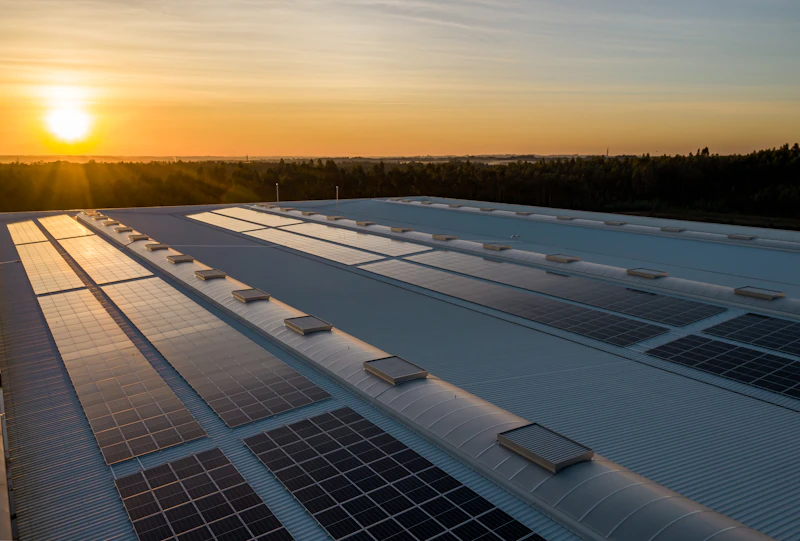 Image: Hybrid solar-battery system in residential application (Source: Unsplash/Photographer)
Hybrid Off-Grid Systems: Energy Independence in Action
The Phenomenon: Across rural Spain and Greek islands, homeowners are cutting grid cords entirely. Why? Unreliable infrastructure or exorbitant connection fees make traditional grids impractical.
The Data: Off-grid hybrid systems require 2-3x more battery capacity than grid-tied alternatives. According to IRENA's 2023 report, battery costs have dropped 89% since 2010, making this feasible. Typical installations now store 15-30kWh – enough to power a home through 3 cloudy days.
Key Components:
- Oversized solar arrays (6-10kW for average homes)
- High-capacity lithium batteries (e.g., Tesla Powerwall or BYD B-Box)
- Advanced inverters with grid-disconnect capability
- Backup generators (diesel/LPG) for extreme contingencies
The Trade-off: You gain complete energy autonomy but lose grid backup. As one Swedish installer told me: "Off-grid hybrids are like owning a sailboat – thrilling freedom, but you must navigate every storm yourself."
Hybrid On-Grid Systems: The Grid-Connected Advantage
The Phenomenon: In Berlin suburbs and Italian cities, homeowners are adopting "grid-assisted" hybrids. These systems leverage the grid as a giant backup battery while maximizing self-consumption.
The Data: EU homes with on-grid hybrids typically achieve 70-85% self-sufficiency while exporting surplus. Feed-in tariffs (like Germany's 8.2¢/kWh) provide revenue. Crucially, battery sizing is 30-50% smaller than off-grid equivalents.
- Solar power runs household loads first
- Excess energy charges batteries
- Fully charged batteries export surplus to grid
- Grid power supplements during high demand/low generation
Why Europeans Love Them: "It's the best of both worlds," notes a Dutch installer. "You slash bills without gambling on weather extremes."
Head-to-Head Comparison: Key Differences
| Feature | Hybrid Off-Grid | Hybrid On-Grid |
|---|---|---|
| Grid Connection | None (optional backup generator) | Continuous connection |
| Typical Battery Size | 15-30 kWh | 5-15 kWh |
| Upfront Investment (EU avg.) | €25,000-€40,000 | €15,000-€25,000 |
| Grid Dependence | 0% | 10-30% seasonal |
| Payback Period | 8-12 years | 6-9 years |
| Best For | Remote locations, unreliable grids | Urban/suburban homes, energy cost optimization |
Real-World Case Study: German Village Implementation
Let's examine Feldheim, Germany – a renewable energy pioneer. When the village decided to become energy-independent, they faced our core dilemma. Their solution? A hybrid off-grid microgrid serving 150 residents.
System Specs:
- 55 wind turbines + 115kW solar array
- 10MWh battery storage (Li-ion)
- Biogas generator backup
Results:
- 100% energy self-sufficiency since 2010
- 35% lower energy costs vs national average
- Zero outage minutes during 2021 winter storms
Contrast this with Hamburg's Smart Hybrid Project (on-grid), where 200 homes achieved 78% self-consumption while earning €420/year from grid exports.
Making Your Decision: Critical Considerations
Through hundreds of installations, I've distilled 5 key evaluation factors:
- Grid Reliability: How often do outages occur in your region? (Check CEER's outage maps)
- Financial Incentives: Does your country offer battery subsidies (e.g., Italy's 110% Superbonus) or favorable feed-in tariffs?
- Energy Patterns: Do you have consistent daily usage or peak-heavy consumption?
- Location Constraints: Urban apartments favor on-grid; rural farmhouses lean off-grid
- Future-Proofing: Will EV charging or heat pumps increase your demand?
 Image: Technician configuring hybrid system components (Source: Unsplash/Photographer)
Your Solar Journey Starts Now
As solar technology evolves, the line between off-grid and on-grid continues to blur. New inverters like the SMA Sunny Boy Storage allow seamless transition between modes. So tell me – what energy independence level aligns with your vision? Are you ready to audit your household's energy personality to find your perfect hybrid match?
 Inquiry
 Online Chat