


Daylight Energy: How Much Can Your Solar System Really Harvest?
Table of Contents
Ever stared at a sunny European sky and wondered: "How much daylight energy could my roof actually capture?" You're not alone. With electricity prices surging 40% across the EU last year, homeowners from Lisbon to Helsinki are asking this exact question. Let's demystify solar potential together.
Europe's Solar Phenomenon: Why Daylight Harvesting Isn't Optional
Picture walking through Amsterdam's canals or Barcelona's Gothic Quarter—you'll spot solar panels gleaming on centuries-old rooftops. This isn't coincidence; it's a continent-wide energy shift. The EU installed 56 GW of solar capacity in 2023 alone—enough to power 16 million homes. Why? Three drivers:
- Policy Acceleration: RePowerEU mandates solar-ready buildings by 2027
- Economic Urgency: Grid electricity now costs €0.28-€0.45/kWh in major capitals
- Tech Democratization: Panel efficiency increased 156% since 2010
Quantifying Daylight Energy: Europe's Harvest Potential
Let's crunch numbers. Daylight energy harvest depends on three pillars:
| Location Factor | Impact Range | Optimization Tip |
|---|---|---|
| Sunlight Hours | 900-1,800 hrs/year | Southern Europe yields 35% more than Nordic regions |
| Roof Angle | ±15% efficiency variance | 30°-40° is Europe's sweet spot |
| Panel Type | 18-23% efficiency | Monocrystalline silicon dominates EU markets |
Here's what this means practically: A Munich home with 30m² south-facing roof can generate 3,800-4,200 kWh annually—covering 70-90% of average household consumption. But technology isn't static...
Case Study: The Schneider Family's Daylight Revolution
Meet the Schneiders in Freiburg, Germany—a textbook example of maximizing daylight energy. Their 2022 installation:
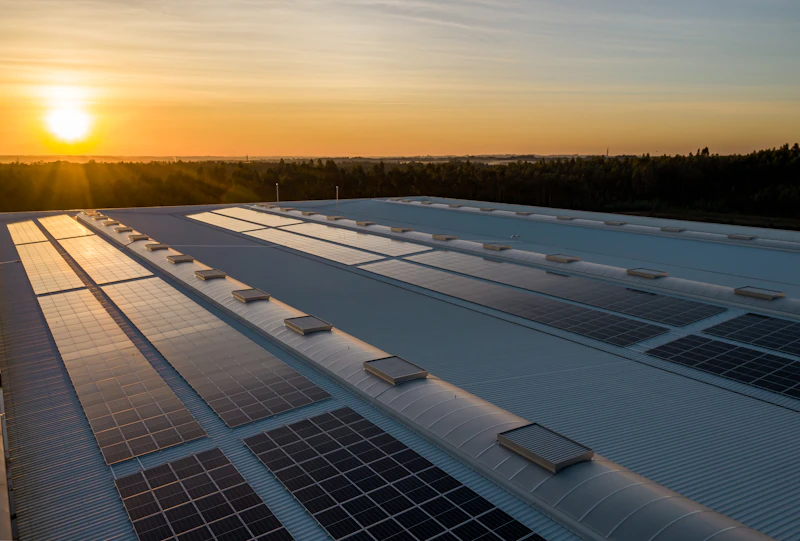
Image: Typical German residential solar installation (Source: Unsplash/Climate Visuals)
- System Size: 8.4 kW hybrid system (panels + storage)
- Annual Yield: 9,200 kWh (verified by Fraunhofer ISE monitoring)
- Results:
- €1,240 annual energy bill reduction
- 83% self-sufficiency in summer months
- 4.2-ton CO₂ reduction
"Our battery stores daylight energy for evening use—it's like having perpetual sunshine in a box," says homeowner Klaus Schneider. Their secret? Hybrid optimization—pairing high-efficiency panels with smart battery management.
Beyond Panels: Storage & Smart Management Insights
The Schneider case reveals a critical insight: Daylight energy harvest is only half the equation. Modern systems tackle two key challenges:
1. Intermittency Solutions
Lithium-ion storage costs dropped 89% since 2010, with 10kWh systems now common in European homes. This turns daylight into 24-hour power.
2. AI-Driven Optimization
Algorithms predict weather patterns and adjust energy flow—like diverting surplus power to water heaters before storms. Studies show this boosts utilization by 22% (IRENA Data).
Your Daylight Energy Future: What's Possible Today?
Advancements are accelerating faster than most realize. Modern bifacial panels harvest reflected light (boosting output 11% on snow-covered Nordic roofs), while EU digital integration standards enable seamless grid feedback.
So here's our invitation: Have you calculated your specific daylight energy potential? How might your lifestyle change with 80% energy independence?
 Inquiry
 Online Chat