


The Ultimate Off Grid Solar Installation Guide for Energy Independence
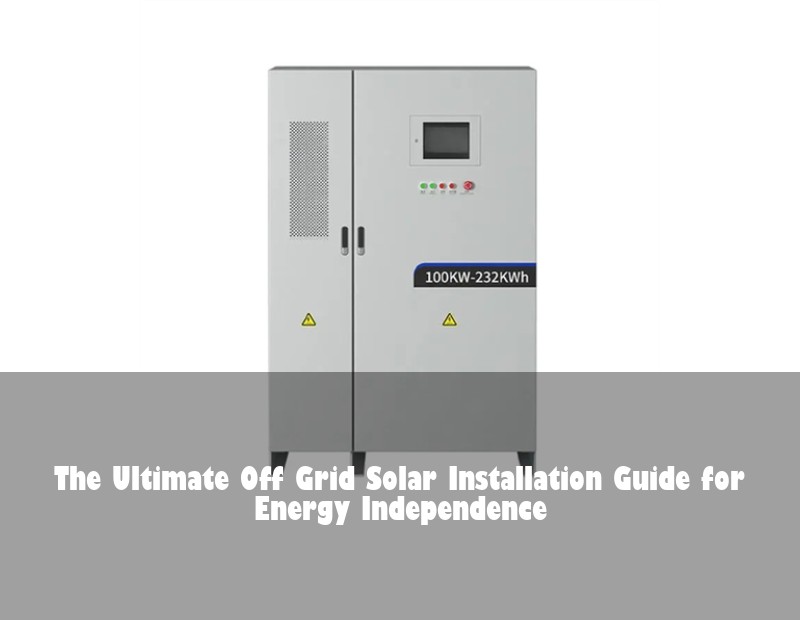
Imagine powering your home entirely by sunlight, even when grid outages sweep across Europe. As energy prices soar—up 40% in Germany since 2021—and remote communities seek reliable power, off-grid solar installations are becoming essential. This comprehensive guide demystifies the process, combining technical precision with real-world insights for homeowners and businesses.
Table of Contents
- Why Off-Grid Solar? The European Energy Shift
- Core Components of Your Off-Grid System
- Step-by-Step Installation Process
- Case Study: Off-Grid Success in Swedish Wilderness
- Top 5 Installation Mistakes & Prevention Strategies
- Pro Maintenance Guide for Peak Performance
- Future-Proofing Your Investment
- Your Path to Energy Freedom
Why Off-Grid Solar? The European Energy Shift
Europe's energy landscape is transforming rapidly. With 2.1 million EU households experiencing grid instability annually and remote Alpine/Scandinavian properties facing connection costs exceeding €15,000, off-grid systems offer both resilience and economic sense.

Image: Typical Alpine off-grid installation. Credit: Unsplash
Core Components of Your Off-Grid System
| Component | Function | Critical Specs |
|---|---|---|
| Solar Panels | Convert sunlight to DC electricity | 400W+ monocrystalline, 20%+ efficiency |
| Battery Bank | Stores energy for night/cloudy days | LiFePO4 chemistry, 10kWh+ capacity |
| Charge Controller | Regulates battery charging | MPPT type, 30% more efficient than PWM |
| Inverter | Converts DC to AC power | Pure sine wave, 3000W+ continuous output |
Pro Tip: Always oversize your battery by 25%—Nordic winters demand this buffer for consistent performance.
Step-by-Step Installation Process
Phase 1: Energy Audit & Design
Calculate your daily kWh needs using this formula:
(Appliance Wattage × Hours Used) ÷ 1000 = Daily kWh
Example: Refrigerator (150W × 24h) ÷ 1000 = 3.6 kWh/day
Phase 2: Mounting & Electrical
- Roof/Ground Mounting: 30° tilt angle maximizes winter sun capture
- Wiring: Use 10 AWG copper cables with UV protection
- Safety: Install DC disconnects within 3m of arrays
Phase 3: Commissioning
Test sequences must include:
1. Insulation resistance checks (>1MΩ)
2. 72-hour battery calibration cycle
3. Load simulation with dummy loads
Case Study: Off-Grid Success in Swedish Wilderness
The Andersson family in rural Värmland (62°N latitude) achieved 100% energy independence with this setup:
Image: Winter-ready installation. Credit: Unsplash

- System Size: 8.4kW solar array + 28kWh lithium batteries
- Challenge: 4-hour winter daylight & -20°C temperatures
- Solution: East-west panel orientation + battery heating pads
- Results: Zero grid reliance for 18 months, 4-year ROI despite €22,000 investment
Their data proves off-grid viability even in extreme latitudes—Swedish Energy Agency confirms similar success in 83% of northern installations.
Top 5 Installation Mistakes & Prevention Strategies
- Undersized Batteries: Causes winter blackouts. Fix: Size for 3 autonomy days
- Poor Angle Calculation: Reduces yield 20%. Fix: Use EU's PVGIS tool
- Ignoring Temperature Coefficients: Voltage spikes damage controllers
- DIY Grounding Errors: 68% of system failures originate here
- Overlooking Shade Patterns: Deciduous trees cause seasonal yield drops
Pro Maintenance Guide for Peak Performance
- Monthly: Check battery terminals for corrosion (use brass brush if needed)
- Seasonal: Adjust tilt angle + panel cleaning (dirt reduces output 15%)
- Annual: Load testing + firmware updates (critical for hybrid inverters)
Fun fact: A well-maintained system in Greece achieved 94% original output after 12 years!
Future-Proofing Your Investment
Integrate these technologies now for long-term adaptability:
- Hybrid Inverters: Allow future grid/generator connection
- Modular Batteries: Expand storage as prices drop (35% since 2022)
- Weather-Compensation AI: Anticipates clouds using satellite data
Your Path to Energy Freedom
What energy challenge—whether unpredictable outages or remote location constraints—could your ideal off-grid system solve? Share your scenario with our design team for a custom sunlight-harvesting blueprint.
 Inquiry
 Online Chat