


Sustainable Energy Storage Solutions: The Backbone of Europe's Renewable Future
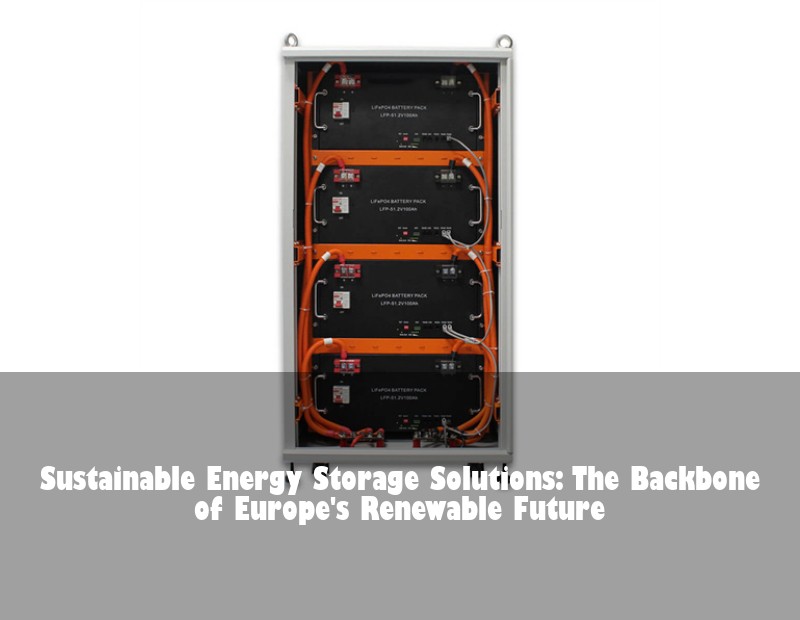
Table of Contents
- The Storage Imperative: Why Renewable Energy Needs a Partner
- Europe's Energy Crossroads: Data Reveals the Challenge
- Beyond Batteries: What Truly Defines Sustainable Storage?
- Case Study: Germany's Wind-Solar Hybrid Project
- Smart Integration: The Next Frontier for Grid Resilience
- Your Storage Journey Starts Here
The Storage Imperative: Why Renewable Energy Needs a Partner
A windy night in Scotland generates surplus wind power while demand plummets. By dawn, that clean energy vanishes unused. This isn't hypothetical—it's Europe's daily reality. Without robust sustainable energy storage solutions, even the most advanced solar parks underperform. Storage transforms intermittent renewables into reliable power assets, acting as a "buffer" between generation peaks and consumption needs. Think of it as capturing sunshine in a bottle for a rainy Tuesday.
Europe's Energy Crossroads: Data Reveals the Challenge
Europe's renewable capacity grew by 15% in 2023 (source: IRENA), yet curtailment—wasting excess green energy—costs €1.2 billion annually. Why? Grids can't absorb unpredictable surges. Consider these pain points:
- Intermittency Gap: Solar generation drops 70-100% overnight
- Price Volatility: Spot market prices swing 300% during peak/off-peak cycles
- Grid Stress: 42% of EU distribution networks need upgrades by 2030
Without storage, we're building highways with no parking lots—energy generated can't wait for when it's needed.
Beyond Batteries: What Truly Defines Sustainable Storage?
True sustainability extends beyond carbon neutrality. We evaluate solutions through a 360° lens:
| Criteria | Conventional Storage | Sustainable Solutions |
|---|---|---|
| Resource Use | Cobalt/Nickel-dependent | Iron-flow or saltwater chemistries |
| Lifecycle Emissions | 60-100kg CO2/kWh | <20kg CO2/kWh (second-life batteries) |
| End-of-Life | 15% recycling rate | 95% recoverable materials |
Emerging technologies like vanadium redox flow batteries exemplify this shift—using non-toxic electrolytes with 25-year lifespans. As Solar Pro's CTO noted: "Sustainability isn't a label; it's measurable resilience."

Image: Modular flow battery deployment (Source: Unsplash/Energy Storage Journal)
Case Study: Schleswig-Holstein's Wind-Solar Hybrid Project
Northern Germany's 2022 initiative combined 80MW wind turbines with 50MW solar PV and a 120MWh lithium-iron-phosphate (LFP) storage system. Results after 18 months:
- 98% curtailment reduction
- €4.3 million annual revenue from frequency regulation
- 9,200 tons CO2 saved (equivalent to 5,000 ICE cars)
This project proves storage isn't just backup—it's a profit center (data: Energy-Storage.News).
Smart Integration: The Next Frontier for Grid Resilience
The future lies in AI-driven storage networks. Spain's GridScale pilot uses machine learning to predict solar dips 48 hours ahead, activating distributed home batteries before grid strain occurs. Key advancements:
Three Layers of Modern Storage Intelligence
- Predictive Analytics: Weather + demand forecasting
- Dynamic Pricing Response: Auto-charge during negative electricity prices
- Cybersecurity Architecture Blockchain-verified energy transfers
As one grid operator quipped: "We don't just store electrons—we teach them ballet."
Your Storage Journey Starts Here
Scaling storage isn't about replacing power plants—it's about enabling cleaner, cheaper, and more democratic energy systems. How will you transform your renewable assets from seasonal performers to 24/7 champions?
 Inquiry
 Online Chat