


Solar Power Inverters for Home Use: Your Gateway to Efficient Renewable Energy
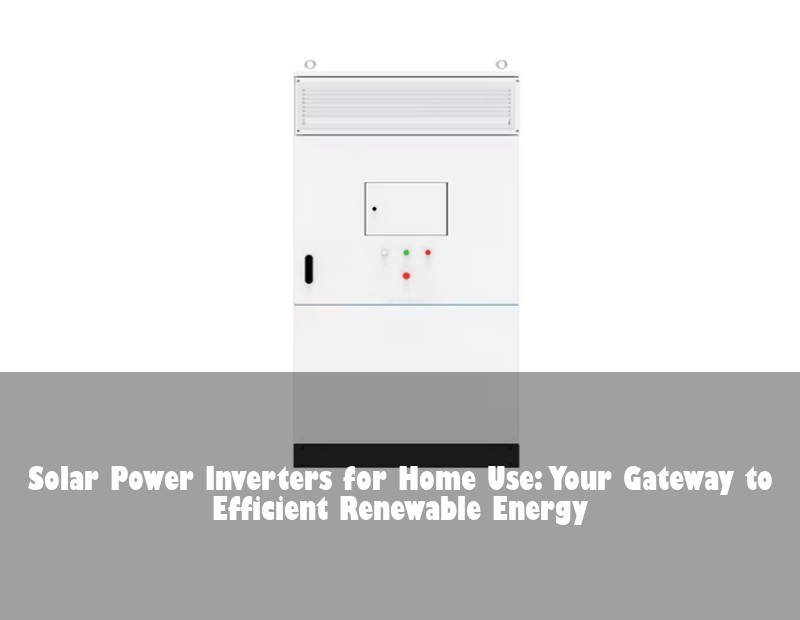
As European homeowners face rising electricity prices—up 70% in Germany since 2020 (BDEW)—solar power inverters for home use have transformed from luxury accessories to essential investments. These intelligent devices convert raw solar energy into usable electricity while optimizing performance. Yet, many households unknowingly lose 15-25% of potential savings through outdated inverter technology. Let's explore how choosing the right inverter unlocks your solar system's true potential.
Table of Contents
- Why Your Inverter is the Brain of Your Solar System
- Types of Solar Power Inverters for Home Use
- Key Benefits: Beyond Basic Energy Conversion
- Real Impact: A German Homeowner’s 23% Energy Boost
- How to Choose Your Perfect Inverter
- The Future: AI-Driven Inverters and Energy Independence
Why Your Inverter is the Brain of Your Solar System
Think of your solar panels as muscles and your inverter as the nervous system. While panels capture sunlight, the inverter:
- Converts DC to AC electricity for household appliances
- Optimizes voltage in real-time to combat shading or debris
- Monitors system health with granular performance data
According to Fraunhofer ISE, premium inverters increase overall system efficiency by up to 30% compared to basic models—making your panels work smarter, not harder.
Types of Solar Power Inverters for Home Use
| Type | Best For | Efficiency Range | European Price Range (€) |
|---|---|---|---|
| String Inverters | Homes with consistent sunlight | 95-97% | 1,000-2,000 |
| Microinverters | Roofs with partial shading | 96-99% | 2,000-3,500 |
| Hybrid Inverters | Homes with battery storage | 94-97% | 2,500-4,500 |
Microinverters shine in Amsterdam’s cloudy conditions, where individual panel optimization prevents entire-string shutdowns during partial shading. Curious how this works during Dutch winters? You’re not alone—we’ll demystify this shortly.
Key Benefits: Beyond Basic Energy Conversion
Modern inverters offer game-changing advantages:
- Real-time monitoring: Track energy production via smartphone apps
- Grid support functions: Stabilize voltage fluctuations during peak demand
- Battery readiness: Seamlessly integrate with storage systems like Tesla Powerwall
As Sarah Müller, a solar technician in Austria, notes: "Homeowners who upgrade to smart inverters typically reduce grid dependence by 40% in the first year—it’s like giving your solar system a PhD."

Image: Sleek hybrid inverter installation in a Milan home. Credit: Luca Bravo via Unsplash
Real Impact: A German Homeowner’s 23% Energy Boost
Consider the Lehmann family in Munich:
- Problem: 8kW system underperformed by 18% due to afternoon shading
- Solution: Replaced string inverter with Enphase microinverters
- Result: 23% higher output and €520 annual savings
Data source: Fraunhofer ISE Case Study #DE2023-227
Their secret? Microinverters bypassed shaded panels while others operated at peak capacity—proving that sometimes, smaller is mightier.
How to Choose Your Perfect Inverter
Ask these critical questions before buying:
- "What’s my roof’s sunlight profile?" (Use tools like EU’s PVGIS)
- "Do I plan to add batteries later?" Hybrid models future-proof your investment
- "What warranty and local support exist?" Seek 10+ year warranties with EU service centers
Remember: A €500 cheaper inverter may cost €2,000+ in lost energy over a decade—penny-wise but euro-foolish!
The Future: AI-Driven Inverters and Energy Independence
Emerging innovations are reshaping European homes:
- AI optimization: Inverters learning consumption patterns (e.g., Siemens’ Home Energy Manager)
- Vehicle-to-grid (V2G): Using EV batteries as backup power via hybrid inverters
- Cybersecurity: IEC 62443 compliance protecting against grid vulnerabilities
Dutch trials show AI-equipped inverters predict weather changes 90 minutes ahead, adjusting output before clouds even arrive. Imagine your system preparing for rain while you sip coffee!
What’s Your Home’s Solar Intelligence Level?
As you consider solar power inverters for home use, ask yourself: Could my current system communicate with my EV charger during a grid outage? If not, it might be time for an upgrade. Explore our interactive EU inverter comparison tool—what surprises will you discover about your home’s potential?
 Inquiry
 Online Chat