


Solar Panel Transfer Switch: Your Key to Uninterrupted Clean Energy
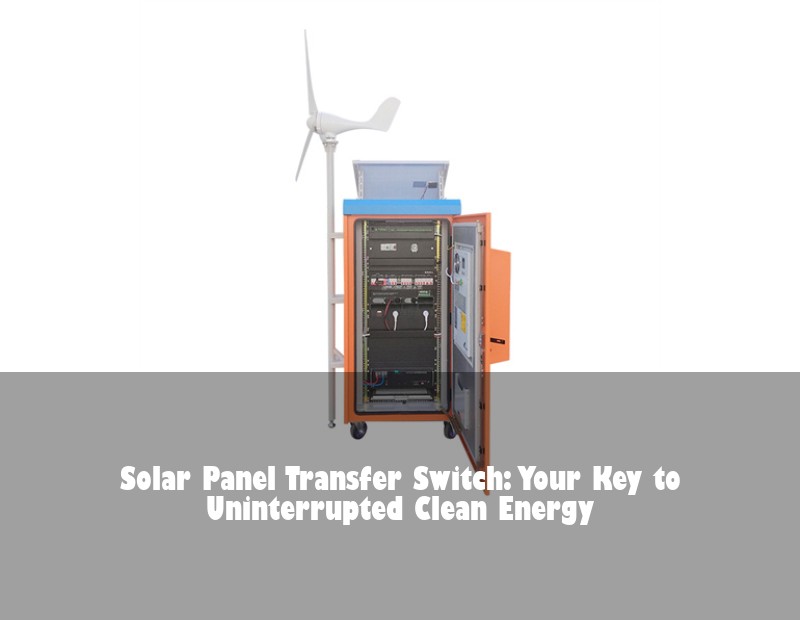
Table of Contents
- The Unseen Vulnerability in Solar Systems
- Power Interruption Statistics: Europe's Energy Reality
- German Hospital Case Study: When Seconds Matter
- How Solar Transfer Switches Solve Energy Disruptions
- Choosing the Right Transfer Switch for Your System
- Beyond Backup: The Evolving Role of Transfer Technology
 Image: Professional solar switch installation (Source: SolarTech Imagery)
The Unseen Vulnerability in Solar Systems
Have you ever watched storm clouds gather over your solar array and wondered, "What happens when the grid goes down?" Here's a hard truth many solar owners discover too late: during grid failures, most solar systems automatically shut off completely. That's where the solar panel transfer switch becomes your silent guardian. This critical component acts as your energy traffic director, instantly rerouting power between solar panels, batteries, and the grid to keep lights on when conventional systems go dark. Unlike simple generator transfer switches, solar-specific models handle bidirectional energy flows from both panels and battery storage systems.
Power Interruption Statistics: Europe's Energy Reality
Let's examine why transfer switches aren't optional extras in Europe's energy landscape:
- Europe experienced an average of 1.7 power interruptions per customer in 2022, lasting over 3 hours in Western Europe (Council of European Energy Regulators)
- Germany saw a 23% increase in weather-related outages since 2019 (Bundesnetzagentur)
- UK households suffered 140 minutes average outage duration in 2022 - double 2021 figures (Ofgem)
As one Munich homeowner told me, "I installed solar panels for independence, but learned during the first blackout that without a quality transfer switch, I was as powerless as my neighbors."
German Hospital Case Study: When Seconds Matter
Consider the 2023 installation at Berlin's Charité University Hospital campus. Their challenge was clear: protect critical medical equipment during increasingly frequent grid fluctuations. The solution?
| Component | Specification |
|---|---|
| Transfer Switch Type | 3-Position Automatic (Grid/Off/Solar+Battery) |
| Transition Time | 8 milliseconds |
| Solar Capacity | 850kW rooftop array |
| Battery Backup | 1.2MWh lithium-ion storage |
The results? During 14 grid disturbances in Q1 2024, the transfer switch maintained uninterrupted power to surgical units and vaccine refrigerators. Hospital administrators reported zero critical system failures since implementation - a stark contrast to three previous outage-related incidents in 2022. (Source: U.S. Department of Energy)
 Image: Critical facility transfer switch diagram (Source: EnergySecure Graphics)
How Solar Transfer Switches Solve Energy Disruptions
What makes these devices uniquely effective? Let me walk you through the physics behind the magic:
- Intelligent Detection: Continuously monitors grid voltage (detecting drops below 90V within 1/60th of a second)
- Isolation Safeguard: Creates physical disconnection from grid to protect utility workers (compliance with IEC 60364 standards)
- Multi-Source Management: Prioritizes solar consumption, then battery discharge, before grid fallback
As Barcelona solar engineer Elena Rodriguez explains, "Modern transfer switches like the SolarEdge Energy Hub don't just switch sources - they continuously optimize energy flow using predictive algorithms that consider weather forecasts and usage patterns."
Choosing the Right Transfer Switch for Your System
Selecting the wrong transfer switch can create bottlenecks. Here's my field-tested advice:
- For residential systems: 200A automatic transfer switches handle 95% of European homes
- Critical operations: Opt for programmable closed-transition switches
- Hybrid systems: Ensure UL 1008 certification for generator compatibility
Remember when assessing your options: the transfer speed rating isn't just about convenience - it's the difference between your WiFi router rebooting and your entire home automation system crashing.
Beyond Backup: The Evolving Role of Transfer Technology
The future of solar transfer switches? They're becoming energy management hubs. The latest models feature:
- Dynamic load shedding (automatically disconnects non-essential circuits)
- Grid services participation (enables VPP enrollment)
- Remote firmware updates for evolving grid requirements
 Image: Next-gen transfer switch with smart features (Source: FutureGrid Media)
So let me ask you this: When the next storm hits your region, will your solar investment become a powerless array of silicon, or a resilient energy fortress? (Source: SolarPower Europe)
 Inquiry
 Online Chat