


The Future is Bright: Why Solar Electric Home Systems are Revolutionizing European Households
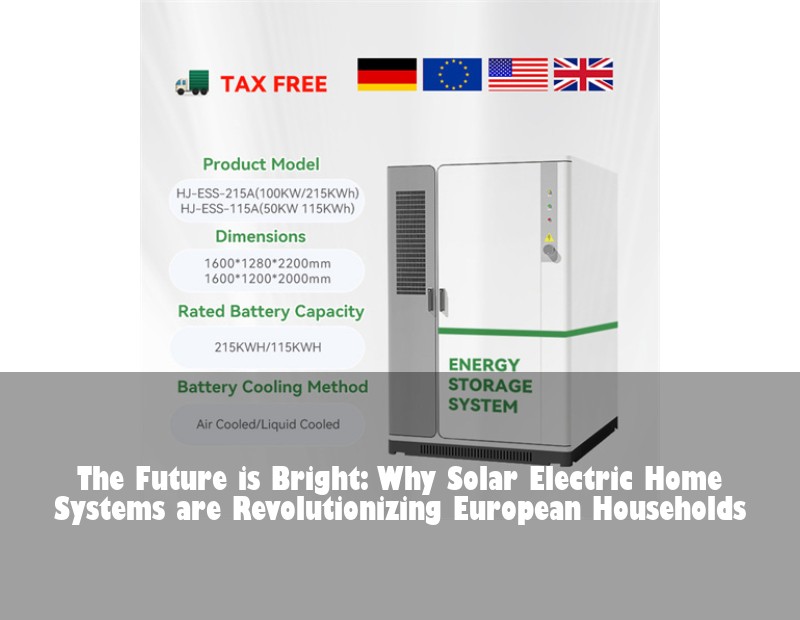
Imagine significantly reducing your electricity bills while contributing to a cleaner planet. This isn't a distant dream; it's the tangible reality offered by a modern solar electric home system. Across Europe, homeowners are increasingly turning to these integrated solutions, combining solar panels, smart inverters, and efficient battery storage, to gain energy independence and resilience. Let's explore why this shift is happening and how it can transform your home energy experience.
Table of Contents
- The Rising Tide: Europe's Embrace of Home Solar & Storage
- Beyond the Hype: The Compelling Data Driving Adoption
- Real-World Impact: A German Family's Journey to Energy Independence
- Understanding Your Solar Electric Home System: More Than Just Panels
- Is Your Home Ready for the Solar & Storage Revolution?
The Rising Tide: Europe's Embrace of Home Solar & Storage
You've likely noticed more solar panels appearing on rooftops in your neighborhood. This visual trend is just the tip of the iceberg. Driven by volatile energy prices, ambitious climate goals, and significant technological advancements, European homeowners are moving beyond simple solar PV. They are investing in comprehensive solar electric home systems that include battery storage. This shift transforms solar from a daytime supplement into a robust, 24/7 energy solution. The motivation? Gaining control. Control over costs, control over carbon footprint, and crucially, control over power availability during grid disruptions. It's a move from passive consumers to active, empowered energy managers.
Beyond the Hype: The Compelling Data Driving Adoption
The surge isn't based on sentiment alone; hard data underscores its logic. Consider the economics first:
- Soaring Electricity Prices: European household electricity prices have seen dramatic increases in recent years, far outpacing inflation in many countries. Solar + storage offers a direct hedge against this volatility.
- Falling Technology Costs: The cost of solar panels has plummeted by over 80% in the last decade. Lithium-ion battery storage costs have also decreased significantly, by around 70% since 2015, making integrated systems more accessible than ever.
- Enhanced Self-Consumption: Without storage, typical households might only use 30-50% of their solar generation directly. Adding a battery can boost this self-consumption to 70% or more, drastically reducing reliance on expensive grid power.
- ROI & Payback: Depending on local energy costs, incentives (like grants or favorable feed-in tariffs), and system size, well-designed solar electric home systems in Europe often achieve payback periods within 8-12 years, with decades of nearly free electricity thereafter. A recent IRENA report highlights the increasing cost-competitiveness of solar+storage globally.
Image: Modern solar panels integrated with a home, showcasing a clean energy solution. (Source: Pexels - Free Stock Photo)
Real-World Impact: A German Family's Journey to Energy Independence
Let's move from theory to practice. Meet the Hoffmann family near Freiburg, Germany. Facing rising Strompreise (electricity prices) and concerned about grid reliability during storms, they installed a 9.8 kWp solar array coupled with a 10 kWh lithium iron phosphate (LFP) battery in early 2022.
The Results (First Year Data):
| Metric | Before System | After System |
|---|---|---|
| Annual Electricity Bill | €2,200 | €320* |
| Grid Electricity Purchased | 5,500 kWh | 800 kWh |
| Self-Consumption Rate | N/A | 86% |
| CO2 Emissions Avoided | ~2.3 tonnes | ~2.3 tonnes |
*Includes minimal grid usage during prolonged winter cloud cover and feed-in tariff revenue for small surplus exported.
"The peace of mind is invaluable," says Anja Hoffmann. "During the storm-related blackout last winter, our lights stayed on, the fridge kept running, and we could even work from home – all powered by our own sun and battery. The financial savings are fantastic, but the independence is truly empowering." This case exemplifies the core benefits European homeowners achieve: cost savings, resilience, and sustainability.
Understanding Your Solar Electric Home System: More Than Just Panels
As a Solar Pro technical expert, I often clarify that a truly effective solar electric home system is a sophisticated ecosystem. Here's what makes it tick:
- High-Efficiency Solar Panels: The engine. Monocrystalline PERC panels are now the European standard, offering the best power density per square meter on typical rooftops.
- Smart Hybrid Inverter: The brain and nervous system. This crucial component manages energy flow – converting DC from panels to AC for your home, prioritizing charging the battery with excess solar, seamlessly switching to battery power when solar is insufficient, and interacting with the grid (importing or exporting only when necessary or beneficial). Modern inverters feature sophisticated energy management software accessible via apps.
- Advanced Battery Storage: The energy reservoir. Lithium-ion batteries, particularly Lithium Iron Phosphate (LFP), dominate the home market due to their safety, long lifespan (often 10+ years or 6,000+ cycles), and excellent performance. Capacity is sized to cover critical loads overnight and during low-sun periods. The SolarPower Europe market report details the rapid growth of this segment.
- System Monitoring & Control: Your dashboard. Real-time apps show energy production, consumption, battery charge/discharge, and savings. You gain insights to optimize usage and system performance.
Think of it as your personal, intelligent microgrid. It maximizes the use of every kilowatt-hour you produce, giving you true control. Importantly, modern systems are designed for safety and reliability, adhering to strict European standards (IEC, VDE).
Is Your Home Ready for the Solar & Storage Revolution?
So, where does this leave you, the European homeowner considering energy options? The combination of persistent high energy costs, climate urgency, mature technology, and compelling user experiences like the Hoffmanns' makes a strong case for exploring a solar electric home system. It's no longer just about being 'green' – it's a smart financial and practical decision for long-term household resilience.
The technology is proven, the benefits are quantifiable (as the data shows), and the path to energy independence is clearer than ever. What specific energy challenge – whether it's unpredictable bills, carbon footprint concerns, or grid reliability – would solving with your own solar and storage system mean the most for your home?
Explore the possibilities with reputable installers and independent resources like the U.S. Department of Energy's Solar Guide for foundational knowledge (while noting specific European regulations and incentives apply).
 Inquiry
 Online Chat