


Reliable Power Backup Solutions Kenya: Empowering Resilience in Energy-Challenged Regions
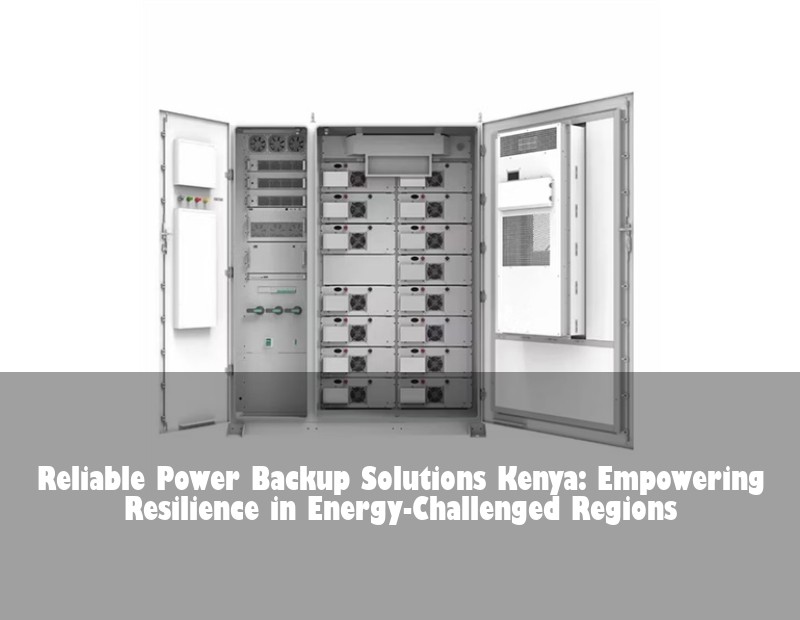
Imagine running a Nairobi hospital when grid power fails during critical surgery. Or operating a Mombasa factory facing daily blackouts that halt production lines. This isn't hypothetical—it's the daily reality driving Kenya's urgent demand for robust power backup solutions. As East Africa's economic hub, Kenya faces unique energy challenges where solar-storage systems aren't just conveniences, but lifelines for businesses and communities.
Table of Contents
The Stark Reality: Kenya's Energy Reliability Crisis
Kenya's grid instability isn't just inconvenient—it's economically crippling. While 75% of urban areas have grid access, reliability remains dire:
- Manufacturers face 8-15 power interruptions monthly
- Average outage duration exceeds 4.5 hours in industrial zones
- Diesel backup costs consume up to 40% of operational budgets
Consider this alarming trend: Kenya's energy demand grows at 5% annually while transmission losses hover near 23%. When European businesses like German automotive suppliers establish Nairobi operations, they're shocked to discover how frequently production halts. As James Mwangi, CEO of Equity Bank Kenya, notes: "Unplanned downtime isn't just about lost productivity—it damages investor confidence in our entire economic ecosystem."
Solar-Storage Systems: The Superior Backup Solution
Why are hybrid solar systems outperforming traditional generators for Kenyan backup needs? The chemistry speaks volumes:
| Solution | Cost per kWh | CO2 Emissions | Maintenance Frequency |
|---|---|---|---|
| Diesel Generators | KES 45-60 | 2.6kg/kWh | Monthly |
| Solar + Lithium Storage | KES 12-18 | 0.05kg/kWh | Bi-annual |
Modern lithium-ion batteries like BYD's Blade series achieve 90% depth-of-discharge—perfect for Kenya's prolonged outages. When paired with bifacial solar panels capturing 20% more East African sunlight than standard modules, you create self-sustaining microgrids. As European solar developers discovered during Nairobi industrial park deployments, these systems provide silent, fume-free power that actually reduces energy bills while providing backup.
Case Study: Life-Saving Resilience at Nairobi Hospital
When The Nairobi Hospital installed East Africa's largest medical solar-storage system in 2022, the impact was transformative:
- Installed Capacity: 1.2MW solar + 850kWh lithium storage
- Backup Runtime: 18+ hours for critical wards
- Annual Savings: KES 38 million (€250,000)

During a 14-hour grid failure in March 2023, while neighboring hospitals scrambled for diesel, their neonatal ICU maintained uninterrupted operation. Dr. Evans Opiyo recounts: "We performed three emergency C-sections by solar-stored power. That backup system didn't just save money—it saved generations." This project, co-developed with Danish clean energy firm IEA Kenya Profile, demonstrates how European technology adapts to Kenya's unique needs.
Your Implementation Roadmap: From Assessment to Resilience
Implementing reliable backup solutions in Kenya requires understanding three critical phases:
- Load Profiling: Kenyan businesses often underestimate their critical loads. A Nakuru flower export facility discovered their cooling systems required 3× more backup power than estimated
- Hybrid Configuration: Smart controllers like SMA's Sunny Island manage grid/solar/generator transitions in <0.2 seconds—crucial for sensitive equipment
- Cybersecurity: With rising digital attacks, physical backup systems need OTA-updatable protection like Huawei's Luna 2.0 safeguards
Kenya's solar irradiation map reveals fascinating regional variations—coastal regions receive 5.8kWh/m²/day while Central Highlands average 4.9kWh/m²/day. This affects your panel orientation strategy. As Kenyan solar pioneer James Mbugua advises: "Don't copy European tilt angles here. Our equatorial position demands near-flat 3-5° installations for optimal rainy-season performance."
The Future: Smart Microgrids Transforming Kenyan Resilience
Kenya's Energy Ministry now mandates solar-storage integration for all new industrial parks—a policy inspired by Europe's Renewable Energy Directive. Emerging technologies will reshape backup solutions:
- Vehicle-to-Grid (V2G) systems using electric buses as mobile storage
- AI-powered outage prediction using Kenya Power's grid analytics
- Blockchain-enabled peer-to-peer energy trading between factories
When German manufacturer Bosch established its Ruiru plant, they implemented a swarm-grid system where neighboring businesses share backup capacity. This reduced individual storage investments by 35% while creating community resilience—an approach now spreading across Kenyan industrial zones.
 Inquiry
 Online Chat