


Off Grid Solar System for Camper: Unlock Boundless Freedom on Europe's Roads
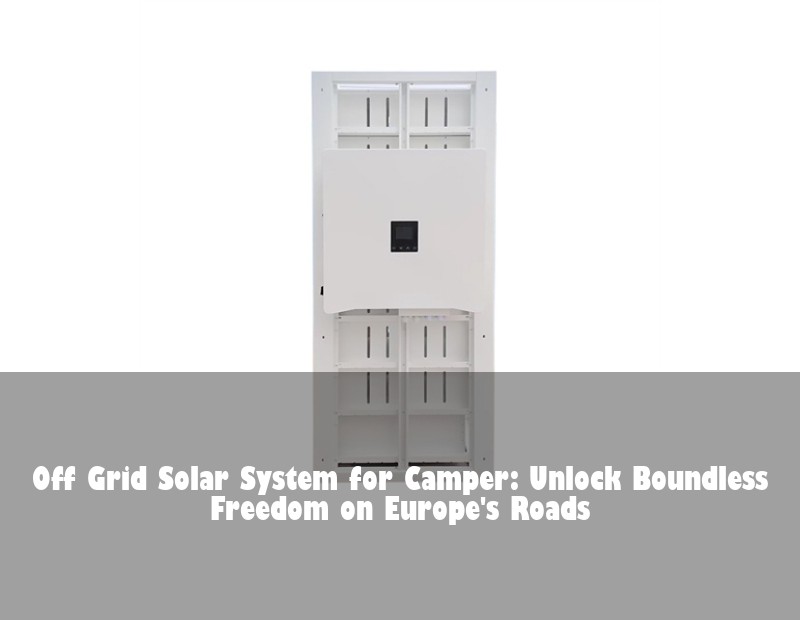
Table of Contents
- Why Off-Grid Solar for Campers is Revolutionizing Travel
- The Frustrating Limits of Traditional Camper Power
- How an Off-Grid Solar System for Camper Works
- Essential Components Breakdown
- Real-World Success: A German Family's 6-Month Adventure
- Battery Tech Showdown: Choosing Your Powerhouse
- Pro Installation Insights for European Campers
- What's Next in Camper Solar Tech?
Waking up to alpine views in Switzerland, your coffee machine humming as sunlight streams through the camper window – no generators, no campground fees, just pure energy independence. Across Europe, a quiet revolution is transforming how adventurers power their journeys. In 2023 alone, 43% of new campervan conversions in Germany integrated solar systems, and for good reason. Let's explore why off-grid solar systems for campers aren't just accessories – they're becoming essential travel companions.
Why Off-Grid Solar for Campers is Revolutionizing Travel
Remember when "getting away from it all" meant sacrificing basic comforts? Modern vanlife enthusiasts refuse this compromise. European campers now demand:
- 24/7 power for fridges in Mediterranean heat
- Silent operation in Norway's protected fjord zones
- Zero-emission compliance in city low-emission zones
As solar expert Dr. Lena Müller notes: "The freedom to park anywhere without energy anxiety changes how we experience travel – it's not just practical, it's psychological liberation."
The Frustrating Limits of Traditional Camper Power
Ever cut a lakeside retreat short because your lead-acid batteries died? You're not alone. Traditional power solutions create three pain points:
- Generator grief: Noise complaints at 55dB(A) average – that's louder than a serious conversation!
- Shore power slavery: 27% of camping fees in France come from electricity hookups
- Battery anxiety: Standard AGM batteries provide only 50% usable capacity before damage
Image: Solar-powered camper in Swiss Alps. Credit: Unsplash/Adrien Olichon
How an Off-Grid Solar System for Camper Works
Imagine your roof as a miniature power plant. Here's the magic in four steps:
- Sunlight hits monocrystalline panels (19-22% efficient in European light)
- MPPT controllers optimize voltage for battery absorption
- Lithium batteries store energy at 95%+ efficiency
- Pure sine wave inverters deliver grid-quality power
"The beauty?" says engineer Marco Bianchi. "Once installed, it's maintenance-free energy harvesting while you hike or sleep."
Essential Components Breakdown
Not all systems are equal. For reliable European touring, prioritize:
- Panels: 300W+ monocrystalline (performs better in cloudy UK conditions)
- Controller MPPT type (30% more efficient than PWM in partial shade)
- Batteries 200Ah+ LiFePO4 (handles Alpine cold better than standard lithium)
- Inverter 2000W pure sine wave (runs espresso machines safely)
Real-World Success: A German Family's 6-Month Adventure
Meet the Hoffmanns: Two adults, two children, and their VW Crafter exploring from Spain to Sweden. Their setup:
- 600W solar array (3x200W panels)
- Victron MPPT 100/50 controller
- 300Ah LiFePO4 battery bank
The results? Average daily harvest: 2.8kWh – enough for:
- 12 hours fridge operation
- 3 hours laptop usage
- Water pump and lighting
Even during a cloudy week in Scotland, they maintained 75% battery capacity. "We never paid for electricity once," says Anja Hoffmann. "The system paid for itself in five months."

Image: Real-time solar monitoring system. Credit: Unsplash/Johnny Africa
Battery Tech Showdown: Choosing Your Powerhouse
| Feature | Lead-Acid | Standard Lithium | LiFePO4 (Recommended) |
|---|---|---|---|
| Cycle Life | 300-500 | 1,500 | 3,000-5,000 |
| Usable Capacity | 50% | 80% | 100% |
| Weight (per 100Ah) | 28kg | 14kg | 12kg |
| Cold Weather Performance | Poor | Good | Excellent |
Source: U.S. Department of Energy Solar Research
Pro Installation Insights for European Campers
Think twice before DIY! Continent-specific considerations:
- Roof curvature: European vans like Renault Masters need flexible panels
- Regulatory compliance: CE-marked components required in EU countries
- Shading solutions: Use bypass diodes for partial shade from Italian cypress trees
Pro tip: Position panels 10cm from roof edges to avoid wind lift at Autobahn speeds.
What's Next in Camper Solar Tech?
Emerging innovations are exciting:
- Perovskite solar cells (35% efficiency in development)
- Solar-integrated awnings (NREL testing shows 20% boost)
- AI-powered energy managers that predict usage patterns
As battery prices drop 15% annually (IEA data), what seemed luxurious is becoming standard.
Ready to silence your generator forever? What's the first appliance you'll power with your new solar freedom?
 Inquiry
 Online Chat