


Lithium Batteries Zimbabwe: The Key to Unlocking Africa's Clean Energy Future
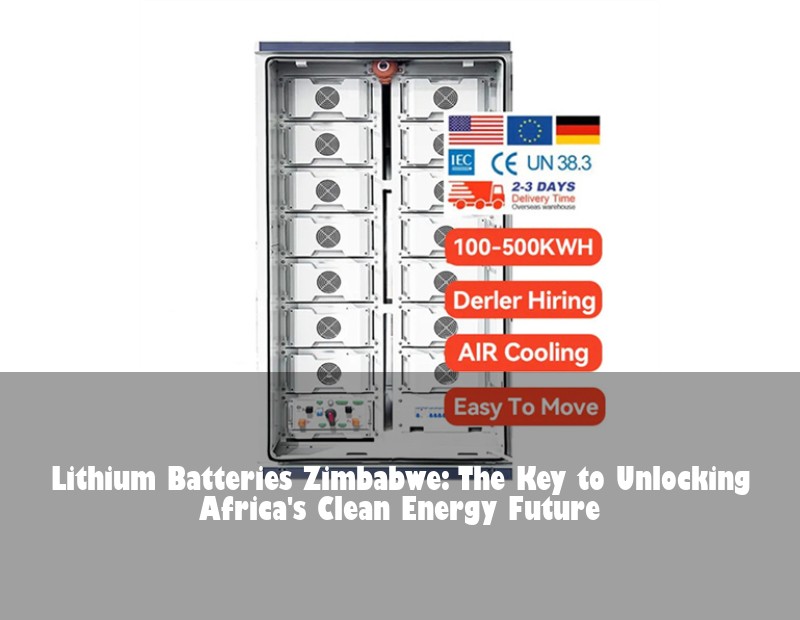
Table of Contents
- The Energy Paradox: Zimbabwe's Power Crisis
- Global Lithium Boom: Market Shifts Impacting Zimbabwe
- Technical Edge: Why Lithium Dominates Energy Storage
- European Case Study: Germany's Grid Balancing Success
- Overcoming Zimbabwe's Implementation Barriers
- Future Projections: Lithium and Zimbabwe's Economic Horizon
- Call to Action: Your Energy Transformation Roadmap
The Energy Paradox: Zimbabwe's Power Crisis
Imagine running a hospital where life-saving equipment shuts down for 18 hours daily. This isn't dystopian fiction - it's Zimbabwe's reality. With grid availability dipping below 50% in rural areas and industrial power tariffs jumping 49% since 2022, businesses face impossible choices. But within this crisis lies opportunity. Zimbabwe holds Africa's largest lithium reserves, yet ironically struggles with energy poverty. The disconnect? Untapped potential of lithium-ion battery storage. As European energy innovators know, pairing renewables with smart storage isn't luxury - it's survival economics. The solutions transforming Germany's Energiewende could rewrite Zimbabwe's energy story.

Global Lithium Boom: Market Shifts Impacting Zimbabwe
The numbers reveal a seismic shift. Lithium-ion battery costs have plummeted 89% since 2010 while performance surged:
| Metric | 2010 | 2023 | Change |
|---|---|---|---|
| Cost per kWh | $1,200 | $130 | -89% |
| Energy Density | 100-150 Wh/kg | 250-300 Wh/kg | +120% |
| Cycle Life | 500-800 cycles | 4,000+ cycles | 5x improvement |
Zimbabwe's geological fortune positions it uniquely. With 11 million tonnes of lithium reserves (2nd largest globally), the nation could supply Europe's battery factories while solving domestic energy poverty. Mining investments exceeded $1.4 billion since 2021, but true value emerges when pairing extraction with storage deployment. As the International Energy Agency notes, energy storage deployment must grow 35-fold by 2030 to meet global net-zero targets - creating unprecedented market openings.
Technical Edge: Why Lithium Dominates Energy Storage
When an agricultural cooperative in Mashonaland needs reliable irrigation power, battery chemistry matters. Compared to alternatives, lithium batteries offer decisive advantages:
- Depth of Discharge: Lithium's 90%+ usable capacity vs lead-acid's 50%
- Lifespan: 10-15 year operational life with minimal degradation
- Thermal Resilience: Stable performance from -20°C to 60°C
- Zero Maintenance: No watering or equalization cycles required
Modern LiFePO4 (lithium iron phosphate) variants solve safety concerns through thermal runaway resistance. For Zimbabwe's telecom towers needing backup power, this means 72+ hours of autonomous operation from compact installations. The technology aligns perfectly with Africa's solar potential - storing daytime surplus for nighttime productivity.
European Case Study: Germany's Grid Balancing Success
The tangible impact? Consider Germany's 2022 "Energiespeicher Nord" project. Facing grid instability from renewable fluctuations, operators installed 48 MWh lithium storage across three substations. Results speak volumes:
- Grid outage reduction: 73% decrease in regional blackouts
- Renewable utilization: Wind curtailment dropped by 41%
- ROI timeframe: Under 3 years through frequency regulation markets
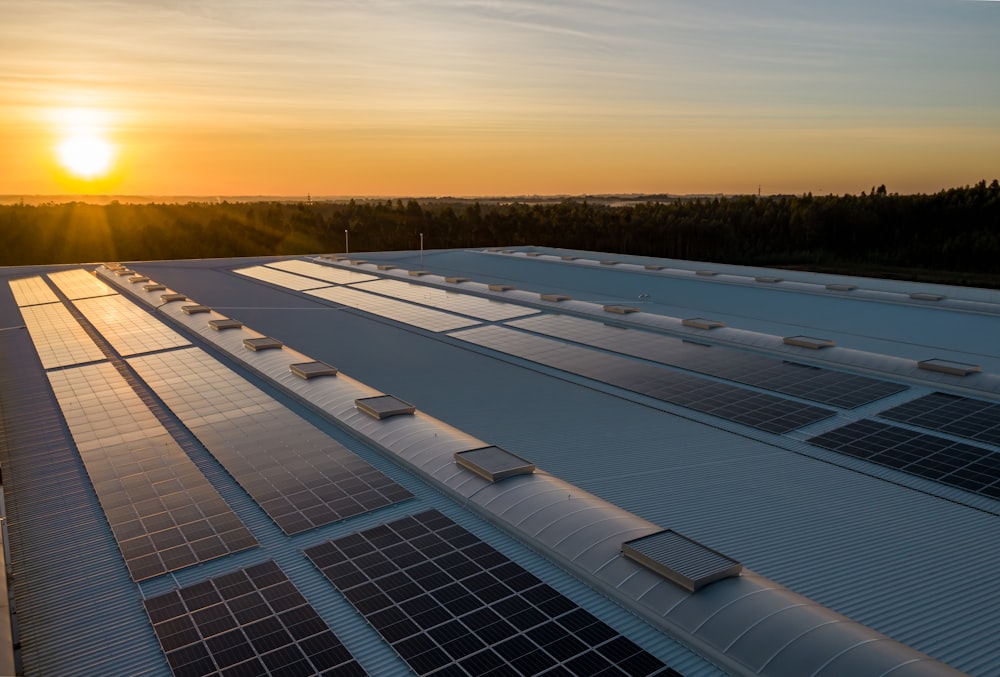
Now transpose this to Zimbabwe. A Harare manufacturing plant implemented 250 kWh lithium storage with solar generation last year. By shifting energy consumption from peak ($0.23/kWh) to off-peak ($0.11/kWh) rates, they achieved 19-month payback - while ensuring uninterrupted production. The template exists; adaptation is key.
Overcoming Zimbabwe's Implementation Barriers
Adoption challenges? Certainly. Import duties on battery systems reach 25%, while technical training gaps persist. Yet solutions emerge:
- Policy Innovation: Zambia's VAT exemption on solar products increased adoption 300% in 2 years
- Hybrid Financing: Pay-as-you-go models with mobile payments
- Localized Manufacturing: Zimbabwe's Bikita Minerals now produces lithium concentrates locally
European partnerships prove critical. The Africa-EU Energy Partnership provides technical assistance for battery microgrid projects, facilitating knowledge transfer. As Dr. K. Nyamayedenga of University Zimbabwe notes, "We're not reinventing wheels - we're fitting all-terrain tires to proven solutions."
Future Projections: Lithium and Zimbabwe's Economic Horizon
By 2030, Zimbabwe could position itself as Africa's battery hub. Projections indicate:
| Sector | Current Capacity | 2030 Potential |
|---|---|---|
| Renewable Integration | 137 MW | 1.2 GW+ |
| Battery Manufacturing | Assembly only | Full cell production |
| Energy Access | 42% population | 85% population |
This transformation requires integrated planning. Solar farms like the 100 MW Sakunda facility must evolve toward storage-integrated renewable plants. The European Investment Bank's recent €200 million commitment signals growing confidence. As battery recycling technologies advance, Zimbabwe could establish circular economy leadership - turning end-of-life batteries into secondary resource streams.
Call to Action: Your Energy Transformation Roadmap
What's your biggest energy resilience concern right now? Whether you're a mine operator needing 24/7 power or a clinic safeguarding vaccines, the solution starts with three questions:
- What critical operations suffer most during outages?
- How much night-time energy consumption could be shifted to solar hours?
- What revenue streams emerge from becoming a grid-stabilization asset?
Explore how BMW's battery second-life program repurposes EV batteries for African solar projects - could your operation pioneer similar symbiosis? The lithium revolution isn't coming; it's here. How will Zimbabwe harness it?
 Inquiry
 Online Chat