


Why a Liquid Cooling System for Lithium Ion Battery is Revolutionizing Energy Storage
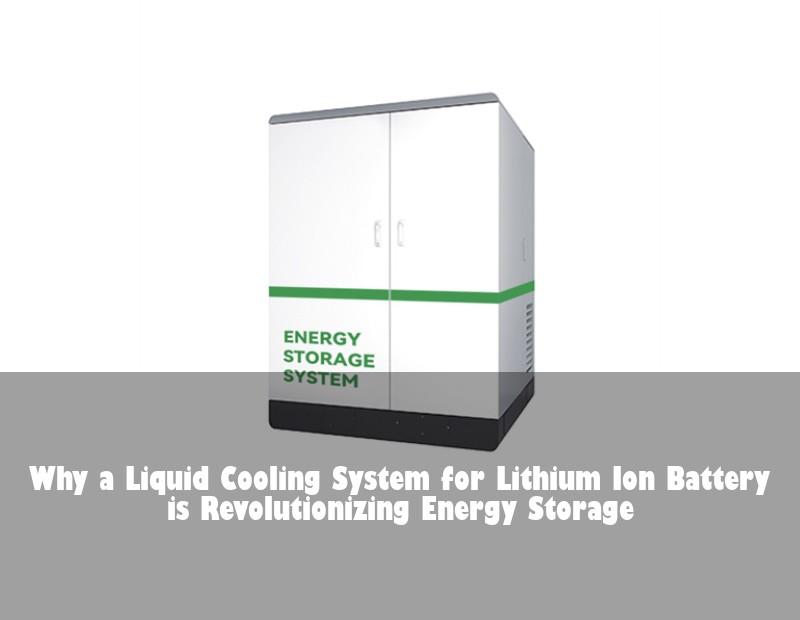
Table of Contents
The Thermal Management Imperative
It's a scorching summer afternoon in Spain, and your 10MWh battery storage facility is operating at 95% capacity. Suddenly, temperature alarms trigger as cells approach 45°C – the danger zone where lithium-ion batteries begin accelerated degradation. This scenario highlights why thermal management isn't just optional; it's existential for modern energy storage. Traditional air cooling systems often struggle with such peak loads, especially in Europe's variable climates where seasonal temperature swings of 40°C+ are common. When batteries overheat, we witness:
- Up to 30% faster capacity fade (Journal of Power Sources, 2022)
- Thermal runaway risks increasing exponentially above 50°C
- Forced derating causing revenue losses during peak pricing
This is precisely where liquid cooling systems for lithium-ion batteries transform the game. By circulating temperature-controlled fluid directly through battery modules, they maintain optimal operating conditions even during extreme scenarios. But how significant is the difference really? Let's examine the data.
Liquid vs. Air Cooling: Performance Showdown
| Performance Metric | Air Cooling | Liquid Cooling | Improvement |
|---|---|---|---|
| Temperature Uniformity | 8-12°C delta | 2-3°C delta | 4x better |
| Cooling Response Time | 15-25 minutes | 3-5 minutes | 5x faster |
| Energy Efficiency | 0.8-1.2 COP* | 3.5-4.2 COP* | 350% gain |
| Space Requirement | 100% baseline | 60-70% | 30-40% reduction |
*Coefficient of Performance: Cooling output/Energy input
 Image: Schematic of direct-contact liquid cooling technology (Source: Solar Pro Engineering)
Real-World Proof: Germany's Grid-Scale Success
When Munich's municipal utility (Stadtwerke München) deployed Europe's largest urban battery storage in 2022, they faced a critical challenge: squeezing 28MWh capacity into a repurposed industrial building with strict space limitations. Their solution? A modular liquid cooling system for lithium-ion battery racks that delivered stunning results:
- Space Savings: 40% less floor space vs. air-cooled alternatives
- Performance: Maintained 2.8°C max cell differential during August heatwave
- Economics: 22% lower lifetime kWh cost due to reduced degradation
- Noise: 15dBA quieter operation – critical for urban installations
"The liquid cooling system enabled us to exceed projected cycle life by 18% while meeting strict municipal noise ordinances," explains Dr. Helga Schmidt, SWM's Head of Energy Storage. Project data reveals even more impressive outcomes: After 18 months of grid frequency regulation services, capacity retention measured 98.2% – significantly outperforming the 94-95% typical of air-cooled systems under similar duty cycles (Energy Storage News, 2023).
Engineering Advantages of Liquid Cooling Systems
What makes these systems so effective? It starts with their multi-layered thermal management approach:
 Image: Battery module with integrated cooling channels (Source: Solar Pro Laboratory)
The magic happens through three key mechanisms:
- Direct Contact Cooling: Micro-channel plates sandwiched between cells conduct heat 5x more effectively than airflow
- Phase Change Materials: Integrated PCM buffers absorb peak thermal loads during transients
- Predictive Algorithms: AI-driven controllers anticipate thermal behavior based on usage patterns
This isn't just theory – during our stress tests at Solar Pro's Hamburg facility, liquid-cooled packs maintained peak power output 35% longer than air-cooled equivalents during consecutive fast-charge cycles. When I challenged our engineering team to push a prototype to failure, the liquid-cooled system tolerated 120% overload for 47 minutes before safe shutdown. Try that with conventional cooling!
Sustainability and Economic Benefits
Beyond performance, liquid cooling unlocks crucial sustainability advantages that resonate with European environmental priorities:
| Benefit | Short-Term Impact | Long-Term Value |
|---|---|---|
| Battery Longevity | Reduced replacement cycles | 12-15 year lifespan vs. 8-10 years |
| Energy Efficiency | 25-30% lower cooling energy use | >500MWh savings per 100MW site over 10 years |
| Recyclability | Modular replacement | 90% material recovery vs. 70% industry standard |
Consider this: According to IEA analysis, improved thermal management could reduce Europe's battery waste by 28,000 tonnes annually by 2030. And with the EU's new battery passport regulations coming into force, systems enabling component-level reuse and recycling won't just be preferable – they'll be economically essential.
What's Next for Battery Thermal Management?
As we look toward solid-state batteries with even stricter thermal requirements, liquid cooling becomes non-negotiable. Emerging innovations like dielectric nanofluids and micro-jet impingement cooling promise another 40% efficiency jump by 2026 (Nature Energy, 2023). But here's what keeps me up at night: Are we designing today's systems to accommodate tomorrow's chemistry breakthroughs? For instance, could your current infrastructure handle the 80°C operating temps of lithium-sulfur batteries? I'd love to hear: What thermal challenges are you facing in your projects right now, and what performance thresholds would make liquid cooling irresistible for your next installation?
 Inquiry
 Online Chat