


Unlocking Grid Resilience: The Transformative Role of Large Scale Electricity Storage
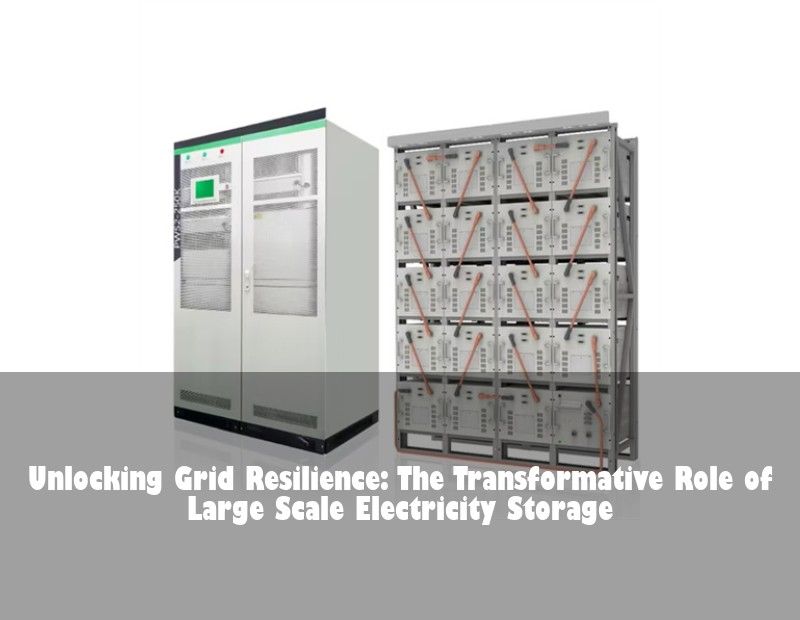
As Europe accelerates its clean energy transition, a critical challenge emerges: how to balance intermittent solar and wind generation with unwavering grid reliability. This is where large scale electricity storage becomes the linchpin of our sustainable future. Imagine a windy night when turbines produce excess power that would traditionally go to waste—now picture that energy being stored and deployed during next day's peak demand. This technological leap isn't theoretical; it's actively reshaping grids from the Scottish Highlands to the Mediterranean coast.
Table of Contents
- The Renewable Dilemma: Sunshine and Gusts Don't Follow Schedules
- Storage Capacity Surge: Europe's Numbers Tell the Story
- Case Study: How UK's 320MW Project Stabilized the Grid
- Beyond Lithium: Tech Innovations Scaling Up
- Your Next Step: What's Possible for Your Region?
The Renewable Dilemma: Sunshine and Gusts Don't Follow Schedules
Europe's ambitious renewable targets—over 40% of energy from renewables by 2030—create a paradox. When German wind farms generate surplus during stormy nights, or Spanish solar plants peak at midday, traditional grids face two options: curtail clean energy or risk instability. This isn't occasional; Germany curtailed 6.5 TWh of renewable energy in 2022. Storage acts as a "time-shifting" solution, absorbing excess generation for later use.
Storage Capacity Surge: Europe's Numbers Tell the Story
Projections reveal explosive growth in grid-scale storage:
| Technology | 2023 EU Capacity (GWh) | 2030 Forecast (GWh) | Primary Use Case |
|---|---|---|---|
| Lithium-Ion Batteries | 9.8 | 48.3 | Frequency regulation (minutes-hours) |
| Pumped Hydro | 140 | 162 | Daily/seasonal shifting |
| Flow Batteries | 0.6 | 7.9 | Long-duration (6+ hours) |
Source: European Association for Storage of Energy 2024 Report
Case Study: How UK's 320MW Project Stabilized the Grid
In 2023, the Pillswood storage facility near Hull—Europe's largest battery site outside Scandinavia—demonstrated storage's critical role. When storm-induced wind surges caused frequency fluctuations, its 320MW/640MWh lithium-ion system responded within milliseconds. Key outcomes:
- Prevented £1.2m in potential grid imbalance penalties
- Integrated 18% more local wind power into the grid
- Provided blackout prevention during the December 2023 cold snap
The project's success relied on two-phase optimization: absorbing cheap overnight wind power for morning peak release, while simultaneously selling frequency response services to National Grid. "It's not just about capacity; it's about milliseconds of response time," notes project lead engineer Elena Rossi. This model is now replicating across Scandinavia, where hydropower reservoirs function as "natural batteries" for wind energy.

Beyond Lithium: Tech Innovations Scaling Up
While lithium dominates headlines, Europe's diverse geography demands tailored solutions:
Pumped Hydro 2.0 (Switzerland)
Nant de Drance's underground plant uses Alpine reservoirs as a 20GWh "water battery," achieving 80% round-trip efficiency. Its reversible turbines can switch from storage to generation in <70 seconds.
Salt-Cavern Hydrogen Storage (Netherlands)
HyStock's pilot converts surplus wind into hydrogen, storing it in underground salt caverns equivalent to 1.2TWh capacity—enough to power Amsterdam for weeks.
Thermal Storage Breakthroughs (Spain)
Andalusia's molten-salt systems store solar heat at 565°C, providing 5-hour industrial power after sunset at half the cost of lithium alternatives.
These technologies shine where lithium struggles: seasonal storage and multi-day resilience. As German engineer Markus Fischer puts it, "Why choose one? Hybrid systems combining lithium's speed with hydrogen's duration are Europe's next frontier."
Your Next Step: What's Possible for Your Region?
Consider this: If your solar farm currently curtails 15% of summer production, could a 4-hour storage system increase your ROI by 22%? What regulatory barriers in your country need addressing to unlock storage's full potential?
 Inquiry
 Online Chat