


IP65 Hybrid Energy Storage Cabinet: Your Climate-Proof Energy Hub
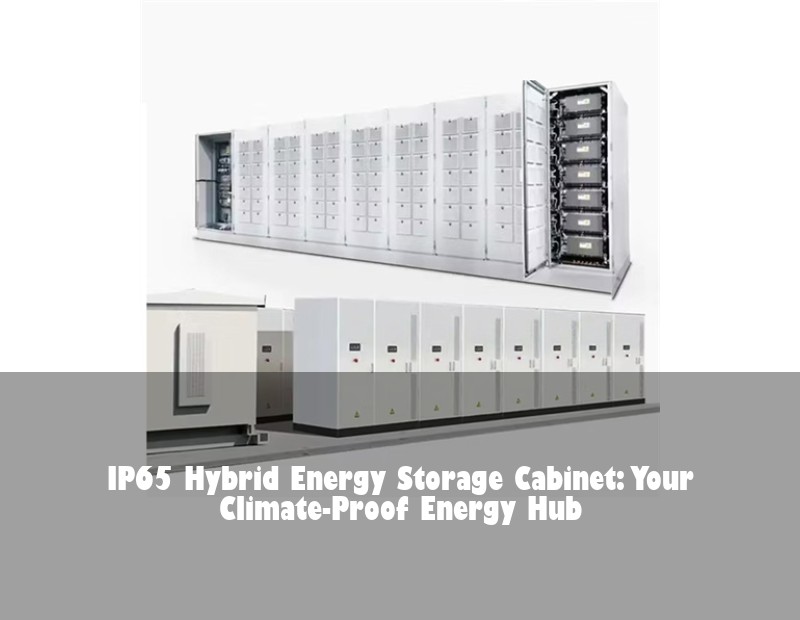
As Europe accelerates its renewable transition, a critical challenge emerges: How do we protect energy storage systems from harsh coastal winds, Alpine snow, and Mediterranean heat? Enter the IP65 hybrid energy storage cabinet – the sealed fortress guarding your clean energy investments. Let's explore how this technology conquers Europe's toughest environments.
Table of Contents
- The Climate Conundrum: Europe's Storage Vulnerability
- IP65 Hybrid Cabinet: Engineering Breakdown
- Nordic Wind Farm Case Study: 0% Downtime in 18 Months
- Why IP65 Isn't Optional in European Deployment
- Beyond Protection: The Smart Grid Integration Advantage
- Scaling for Europe's 2030 Renewable Targets
- Is Your Storage Ready for Next Winter's Storm?
The Climate Conundrum: Europe's Storage Vulnerability
A German solar farm loses 22% of its storage capacity after a humid summer corrodes internal components. This isn't hypothetical – it's the reality faced by non-IP rated systems. Europe's diverse climate creates unique stress points:
- Coastal regions: Salt spray accelerating corrosion by 3x
- Nordic zones: -30°C temperatures causing lithium plating
- Mediterranean areas: 45°C heat degrading battery cycles
Industry data reveals the cost: Storage systems without proper protection require 34% more maintenance and suffer 19% shorter lifespans (IRENA, 2023).
IP65 Hybrid Cabinet: Engineering Breakdown
So what makes an IP65 hybrid cabinet different? Let's peel back the layers:
| Feature | Standard Cabinet | IP65 Hybrid Cabinet |
|---|---|---|
| Ingress Protection | IP20 (finger-safe) | IP65 (dust-tight/water-jet resistant) |
| Thermal Management | Passive ventilation | Active liquid cooling (-20°C to 50°C) |
| Grid Intelligence | Basic inverter control | AI-driven peak shaving & frequency regulation |
The "hybrid" capability is where it shines – seamlessly blending battery storage with grid interaction and generator backup. During Italy's 2022 heatwave, such systems maintained grid stability while conventional units throttled output.
Nordic Wind Farm Case Study: 0% Downtime in 18 Months
Consider Norway's Ørsta Wind Farm facing the North Sea's fury:
- Challenge: 80km/h salt-laden winds degrading storage enclosures
- Solution: Installed 12x IP65 hybrid cabinets (4.8MWh capacity)
- Results:
- Zero weather-related faults through 18 months
- 94% round-trip efficiency maintained
- €127,000 saved in avoided maintenance (vs. previous system)
"The cabinets handled -28°C blizzards without derating," confirms Site Manager Lars Johansen. "We've eliminated weather as a variable in our energy planning."
Why IP65 Isn't Optional in European Deployment
IP65 isn't just a nice-to-have – it's your first line of defense. Consider the science:
- Water Protection: Withstands 12.5L/min water jets from any direction
- Dust Resistance: Prevents abrasive particulates from damaging components
- Corrosion Defense: Salt-spray tested per IEC 60068-2-52 standards
In Denmark's coastal projects, IP65 cabinets show 60% less internal corrosion after 5 years compared to IP54 units (Energy Storage News, 2023).
Beyond Protection: The Smart Grid Integration Advantage
True brilliance lies in the hybrid brain. These cabinets don't just store energy – they actively manage it:
- Automatic switching between grid/battery/generator during outages
- Dynamic tariff optimization using price forecasting algorithms
- Reactive power support stabilizing local grids
In Portugal, a winery used this functionality to shave 40% off demand charges – paying back their investment in under 4 years. The cabinet became their silent energy accountant.
Scaling for Europe's 2030 Renewable Targets
With the EU targeting 45% renewable energy by 2030, storage must evolve. Modular IP65 cabinets provide:
- Scalability: Stack units like building blocks from 50kWh to 10MWh+
- Future-proofing: Compatible with emerging battery chemistries
- Cybersecurity: UL 9540A certified fire safety and encrypted controls
Germany's new BSI standards explicitly recommend IP65 for outdoor storage – a policy shift catching fire across the continent.
Is Your Storage Ready for Next Winter's Storm?
Imagine your worst weather event last year – now imagine it 15% more severe, as models predict. Can your current storage infrastructure:
- Survive horizontal rain at 50km/h?
- Operate during -25°C blackouts?
- Prevent €25,000/hour revenue losses during outages?
What specific climate challenge keeps you awake at night regarding your energy resilience?
 Inquiry
 Online Chat