


Hybrid Inverter and Battery: Your Gateway to Energy Freedom in Europe
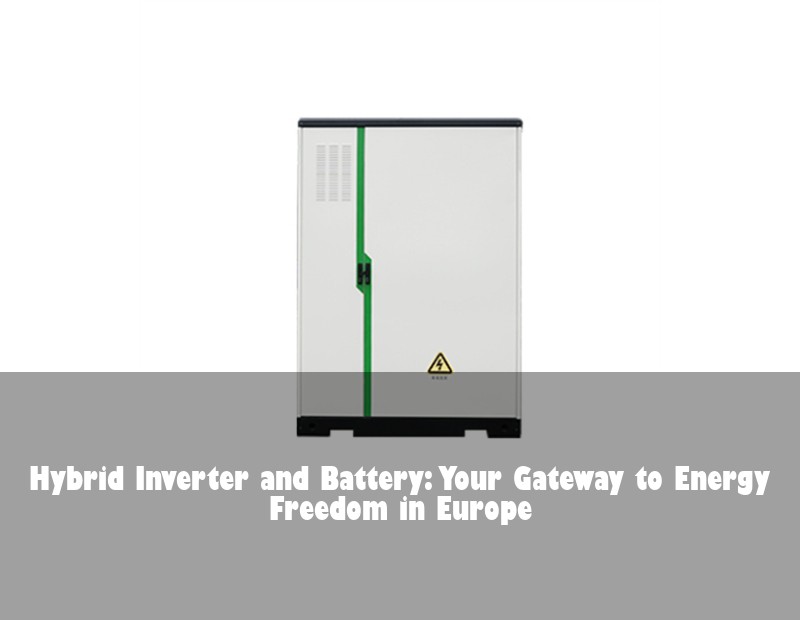
Table of Contents
- Europe's Energy Challenge: Rising Costs & Grid Instability
- What Makes Hybrid Inverter and Battery Systems Revolutionary?
- How Hybrid Systems Work: The Technical Dance of Energy
- Real-World Impact: A German Case Study with Hard Data
- Choosing Your Hybrid System: Key Considerations
- Where Hybrid Technology Is Headed Next
Europe's Energy Challenge: Rising Costs & Grid Instability
You open your electricity bill to find a 40% price hike compared to last year. Across Europe, this isn't hypothetical – it's reality. In 2022, EU household electricity prices surged to €0.25/kWh on average, with peaks over €0.40/kWh in Germany during supply crunches. Grid instability compounds the issue; aging infrastructure caused over 150 minutes of power interruptions per EU customer in 2021. This volatility isn't just inconvenient – it threatens both household budgets and Europe's green transition goals.
Image source: Unsplash (Energy data visualization)
What Makes Hybrid Inverter and Battery Systems Revolutionary?
Enter the hybrid inverter and battery – the Swiss Army knife of energy management. Unlike traditional setups, these systems intelligently juggle three power sources:
- Solar panels (your primary energy source)
- Battery storage (your energy savings account)
- The grid (your backup plan)
What truly sets them apart? Their brain-like control systems. During sunny afternoons, they prioritize charging batteries instead of exporting surplus solar at low rates. When grid prices spike at 6 PM? They seamlessly switch to battery power. It’s like having an energy concierge optimizing every kilowatt-hour.
How Hybrid Systems Work: The Technical Dance of Energy
Let's break down the magic behind hybrid inverter and battery systems:
| Component | Function | User Benefit |
|---|---|---|
| MPPT Solar Charger | Extracts maximum power from panels | 5-30% more yield than basic inverters |
| Bidirectional Inverter | Converts DC↔AC both ways | Single-device simplicity |
| AI Energy Manager | Predicts usage/weather patterns | Automated cost optimization |
Consider a typical flow: At dawn, solar powers your home while charging batteries. By midday, batteries reach 100% and excess solar sells to the grid. When clouds appear, the system blends battery and grid power to avoid consumption spikes. This orchestration happens silently 24/7 – no manual intervention needed.
Real-World Impact: A German Case Study with Hard Data
The Müller family in Bavaria provides a compelling example. After installing a 8kW hybrid inverter with 10kWh storage in 2021:
- Reduced grid dependence by 78% annually
- Achieved €1,240/year savings despite Germany's volatile energy market
- Cut carbon footprint by 3.2 tonnes CO2/year – equivalent to planting 80 trees
Their secret sauce? Time-of-use optimization. During Fraunhofer Institute's identified peak pricing windows (4PM-9PM), their system avoids grid draw completely. The data speaks volumes: Their ROI period was just 6.2 years, beating the 8-year European average for solar-only systems.

Image source: Unsplash (German residential solar installation)
Choosing Your Hybrid System: Key Considerations
Not all hybrid inverter and battery solutions are equal. Keep these factors in mind:
- Battery Chemistry: Lithium iron phosphate (LFP) batteries dominate Europe for safety and 6,000+ cycle lifespans
- Scalability: Can you add batteries later? Leading systems support modular expansion
- Grid Compliance: Ensure VDE-AR-N 4105 certification for German grid compatibility
- Software Intelligence: Look for systems that integrate with ENTSO-E grid data for predictive charging
Pro tip: Size your battery to cover evening consumption (typically 3-8kWh for EU households). Oversizing often extends ROI periods due to battery degradation.
Where Hybrid Technology Is Headed Next
The innovation curve is accelerating. By 2025, expect:
- Vehicle-to-home (V2H) integration using EV batteries as backup storage
- Blockchain-enabled peer-to-peer energy trading between neighbors
- AI that syncs with weather APIs for hyper-accurate production forecasts
These advancements will transform hybrid systems from energy tools to profit centers. Imagine your system automatically selling stored power during grid emergencies at €1.00/kWh – a reality already being tested in UK virtual power plants.
Ready to Take Control?
What energy independence milestone could your household reach with a tailored hybrid solution? Explore our interactive energy calculator to visualize your potential savings and contribution to Europe's renewable future.
 Inquiry
 Online Chat