


How Much Amp Hour Battery Do You Need for Your Solar System?
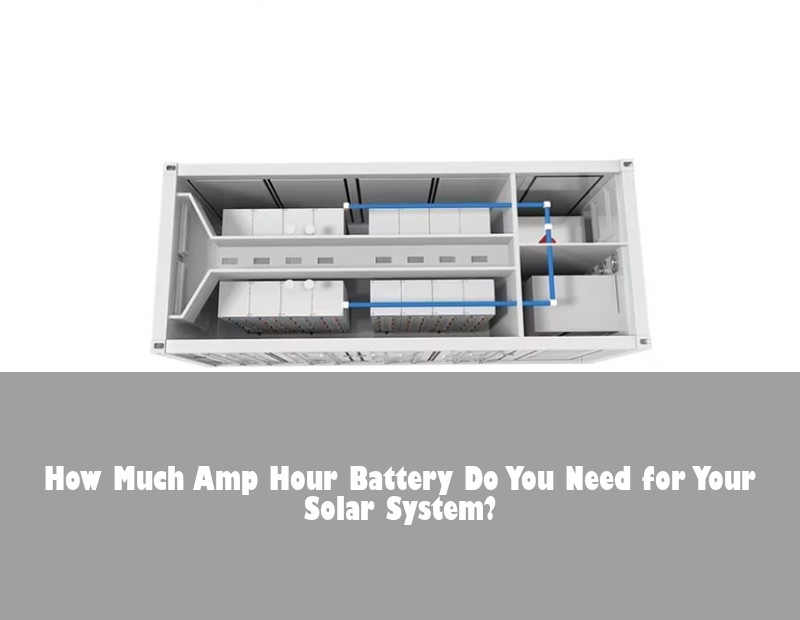
Ever stared at your solar panels wondering if your battery can handle that stormy weekend? You're not alone. Choosing the right amp hour battery capacity is critical for energy independence across Europe. This guide cuts through the complexity, helping you calculate precisely how much storage you need.
Why Battery Sizing Isn't Guesswork
Undersized batteries leave you grid-dependent during outages. Oversized systems drain budgets without delivering ROI. The sweet spot lies in understanding your unique energy fingerprint.
Europe's Solar Storage Reality
- German households average 3,500kWh yearly consumption (Fraunhofer ISE, 2023)
- UK sees 30% higher winter energy usage vs summer (National Grid ESO)
- 57% of Spanish solar adopters cite outage protection as key motivation (APPA Renovables)
Your Personal Amp Hour Calculation Roadmap
Follow this step-by-step PAS framework to pinpoint your needs:
Problem: The Energy Blackout Effect
Imagine your fridge, lights, and router shutting down during peak usage. Without proper battery capacity, renewable energy becomes unreliable.
Agitate: The Cost of Wrong Sizing
- Too small: 78% faster battery degradation from deep discharges
- Too large: €3,000+ wasted on unused capacity in typical EU homes

Solution: The Exact Calculation Formula
Amp Hours (Ah) = (Daily kWh Usage × Days Autonomy) ÷ (Battery Voltage × Depth of Discharge)
Real-World Munich Case Study
The Schmidt Family:
- Daily usage: 12 kWh
- Target autonomy: 2 days
- System voltage: 48V
- Safe discharge: 80% (LiFePO₄)
Calculation:
(12 kWh × 2) ÷ (48V × 0.8) = 625Ah
Their actual installed capacity: 2× 315Ah batteries (630Ah total)
| Appliance | Watts | Daily Hours | kWh/Day |
|---|---|---|---|
| Refrigerator | 150 | 24 | 3.6 |
| LED Lighting | 200 | 5 | 1.0 |
| Laptop | 60 | 8 | 0.48 |
| WiFi Router | 10 | 24 | 0.24 |
| Total | - | - | 5.32 |
How Battery Chemistry Changes Your Numbers
Not all amp hours are created equal. See how technology affects real capacity:
| Battery Type | Usable DoD | Cycle Life | Space Needed |
|---|---|---|---|
| Lead-Acid | 50% | 1,200 cycles | 100% |
| LiFePO₄ | 80% | 6,000+ cycles | 60% |

Europe-Specific Factors We Often Miss
- Winter Solar Yield: UK generates 60% less winter solar than summer
- Tariff Structures: Italy's Scambio sul Posto rewards smaller exports
- Climate Impact: Nordic batteries need 15% more capacity at -20°C
Future-Proofing Your Investment
That EV arriving next year? Consider these expansion strategies:
- Modular Systems: Grow from 5kWh to 20kWh incrementally
- Voltage Matching: Ensure compatibility with future solar arrays
- Software Upgrades: Smart algorithms boost usable capacity by 7%

Expert Tip: The 120% Rule
Always add 20% buffer capacity. Why? Battery efficiency averages 95% (Battery University), and aging reduces capacity by 0.5-2% annually. Your 10kWh system today needs 12kWh design capacity.
Your Solar Independence Blueprint
Now that you see how amp hours translate to real-world resilience, what critical loads will you prioritize when designing your system? Explore our interactive sizing tool tailored for European climates to test your specific scenario.
 Inquiry
 Online Chat