


Home Battery Storage Price: Unlocking Energy Independence Across Europe
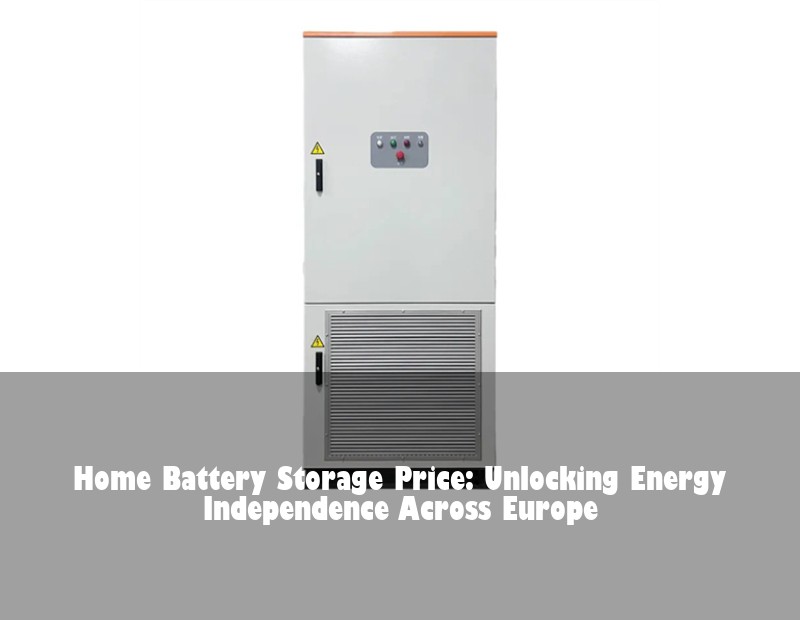
Table of Contents
- The European Home Battery Boom: Why Prices Matter More Than Ever
- Breaking Down Home Battery Storage Prices: From Hardware to Hidden Fees
- Real-World Insights: A German Household's Battery Journey
- Price Evolution: What 2024 Reveals About Future Costs
- Smart Buying Strategies: Maximizing Value in Europe's Diverse Market
- Beyond Price: The Value Equation of Energy Resilience
The European Home Battery Boom: Why Prices Matter More Than Ever
It's a stormy evening in Berlin, and your neighbors' lights flicker off. Yours stay on. That's the reality for over 500,000 European households now using home battery storage. As electricity prices soared 40% across the EU since 2021 (Eurostat data), the home battery storage price became less of a luxury consideration and more of an economic necessity. But what's driving this surge? Three converging trends: volatile energy markets, solar panel adoption doubling in key markets like Italy and Poland, and new EU directives promoting energy self-sufficiency. When solar owners realize they can store excess energy instead of selling it back at low rates, batteries transform from nice-to-have to must-have.

Source: Unsplash - Typical residential energy storage setup in Europe
Breaking Down Home Battery Storage Prices: From Hardware to Hidden Fees
Let's demystify what you're really paying for. A complete home battery system includes:
- Core components: Battery cells (60-70% of total cost), hybrid inverter, and management system
- Installation: Labor, wiring, and grid-connection fees
- Hidden factors: Wall-mounting infrastructure, maintenance contracts, and regional compliance certifications
| System Size (kWh) | Average Price Range (€) | Key Influencing Factors |
|---|---|---|
| 5 kWh | 4,000 - 6,500 | Entry-level systems; limited backup capacity |
| 10 kWh | 7,000 - 12,000 | Most popular size; balances cost and daily coverage |
| 15+ kWh | 12,000 - 20,000+ | Whole-home backup; premium brands dominate |
Pro tip: Watch for "phantom costs." Installation complexity can add 15-30% in historic homes with outdated electrical panels. And remember - the cheapest upfront price often means higher long-term costs. Lithium iron phosphate (LFP) batteries might cost 20% more than older NMC tech but last nearly twice as long.
Real-World Insights: A German Household's Battery Journey
Meet the Hoffmann family near Munich. Their 2023 installation tells a revealing story:
- System: 11.4 kWh BYD battery + SolarEdge inverter
- Total cost: €9,200 after KfW subsidy
- Performance: 78% energy self-sufficiency (up from 35% with solar alone)
- Payback: Estimated 6.8 years based on €1,350 annual savings
"We considered waiting for lower prices," says Thomas Hoffmann, "but with electricity hitting €0.43/kWh, delaying cost us more than the battery itself." Their experience highlights a crucial insight: price sensitivity decreases when homeowners run precise ROI calculations. As battery efficiency now exceeds 90%, the focus shifts from pure cost to value-per-euro.
Price Evolution: What 2024 Reveals About Future Costs
Remember when a 10kWh system averaged €15,000? Today's €7,000-€12,000 range shows how manufacturing scale and competition are reshaping the market. Three key drivers:
- European gigafactories like Northvolt in Sweden cutting import costs
- Second-life EV batteries entering the market at 40% lower cost
- Software innovations squeezing 15-20% more usable capacity from existing hardware

Source: Unsplash - Battery price decline trajectory
Industry projections from BloombergNEF suggest another 30% drop by 2027. But here's what most miss: installation costs aren't falling as fast. In Italy, certified electrician rates have actually risen 12% since 2022. That's why savvy buyers now bundle solar and battery installations - it cuts labor costs by up to 40%.
Smart Buying Strategies: Maximizing Value in Europe's Diverse Market
Navigating Europe's fragmented market requires local intelligence. Consider these regional differences:
- UK: VAT-free installations until 2027
- France: MaPrimeRénov' subsidies up to €5,000
- Scandinavia: Off-grid capabilities add 15-20% premium
Three proven tactics to optimize your investment:
- Demand modular systems like Sonnen or Tesla Powerwall 3 that allow capacity upgrades
- Time purchases with subsidy cycles (most EU programs renew quarterly)
- Explore virtual power plant programs - Enphase's UK users earn €200-€500/year feeding excess power to grids
"The biggest mistake?" notes energy consultant Elara Schmidt. "Focusing solely on €/kWh. A battery with advanced thermal management might cost more but delivers better ROI in Nordic winters."
Beyond Price: The Value Equation of Energy Resilience
When Barcelona experienced 12-hour blackouts last winter, battery-equipped homes maintained power while others scrambled. This highlights the intangible value beyond kilowatt-hour economics. Modern systems now offer:
- Storm outage protection (0.2 second switchover)
- Grid services revenue through VPP participation
- Future-proofing for EV charging and heat pump integration
As European energy insecurity grows, how will your household redefine "value"? Could the peace of mind during a blackout outweigh pure financial metrics? The next generation batteries entering the market aren't just cheaper - they're smarter, with AI-driven energy optimization that can predict usage patterns and weather changes. Imagine your system automatically charging during cheap overnight rates then powering your home during peak €0.50/kWh hours. That's where the real savings begin.
Ready to calculate your personalized payback period? What energy challenges keep you awake at night that a battery could solve?
 Inquiry
 Online Chat