


The Strategic Value of Your Energy to X Supplier in a Transforming Grid
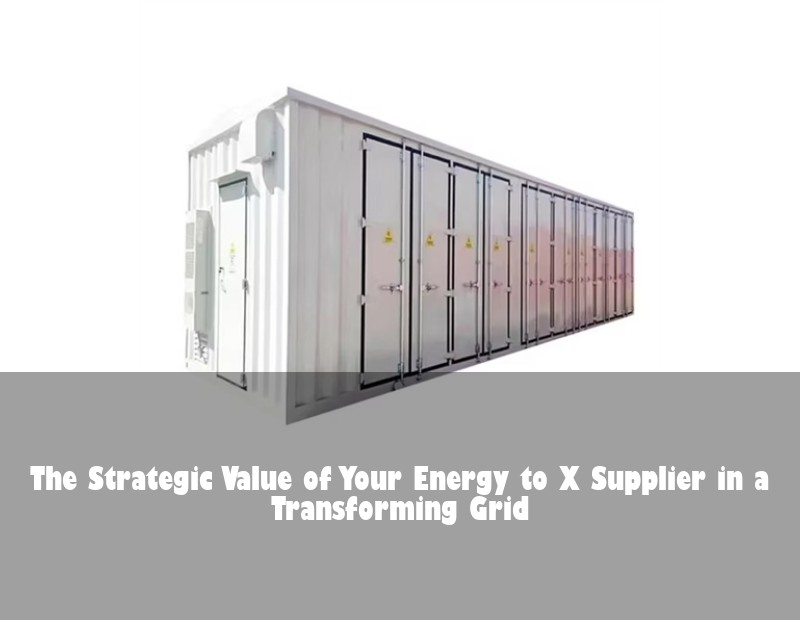
Imagine your solar panels producing more energy than you can use. Instead of feeding all that excess back into the grid at diminishing rates, what if you could transform it into another valuable form – heat, hydrogen, or even synthetic fuels? This is the core promise of Energy to X (E2X) technologies, and choosing the right energy to x supplier is becoming a critical strategic decision for businesses and communities across Europe. As grids modernise and renewables penetration soars, the ability to convert, store, and utilise energy flexibly unlocks new revenue streams and resilience.
Understanding the Energy to X Imperative
The European energy landscape is undergoing rapid decarbonisation. Ambitious targets (like the EU's 55% GHG reduction by 2030) drive massive renewable deployment. However, integrating this intermittent generation creates challenges:
- Grid Congestion: Particularly during peak solar/wind hours, excess power strains infrastructure.
- Price Volatility: Wholesale electricity prices can plummet (even become negative) during high renewable output periods.
- Seasonal Mismatches: Solar peaks in summer, while heating demand peaks in winter. Wind can be variable.
E2X technologies address these by converting surplus renewable electricity (electrons) into other forms of energy (molecules, heat) or valuable products. This conversion facilitates:
- Long-Term Storage: Hydrogen or synthetic methane can be stored seasonally.
- Sector Coupling: Linking power generation with transport, heating, and industry.
- Value Optimisation: Converting cheap, excess electricity into higher-value commodities.

Image Source: UNIRedGrid EU Project - Power-to-X Applications Illustration
Why Your Choice of Energy to X Supplier Matters More Than Ever
Implementing E2X isn't simply about buying electrolysers or heat pumps. It's a complex integration challenge requiring deep expertise. A capable energy to x supplier brings far more than hardware:
- Integrated System Design: Optimising the interface between solar PV, battery storage, and the specific E2X technology (e.g., electrolyser for hydrogen) for maximum efficiency and ROI.
- Grid Integration & Market Access: Navigating complex grid connection requirements and designing systems that can participate effectively in flexibility markets (e.g., providing grid balancing services).
- Technology Selection & Expertise: Understanding the nuances of different E2X pathways (P2G, P2H, P2L) and matching the right technology to the specific application, site conditions, and economic goals.
- Lifecycle Management & Optimisation: Ensuring long-term performance, maintenance planning, and adapting operations to evolving market conditions and regulations.
Key Differentiators of a Leading Energy to X Supplier
| Feature | Basic Supplier | Strategic Energy to X Partner |
|---|---|---|
| Scope | Component Sales (e.g., just the electrolyser) | End-to-End Solutions (Design, Tech, Integration, Optimisation, Services) |
| Expertise | Limited to specific hardware | Deep understanding of renewables integration, grid dynamics, E2X processes, and market mechanisms |
| Software & Control | Basic device control | Advanced Energy Management Systems (EMS) for holistic optimisation across generation, storage, conversion, and consumption/markets |
| Data Utilisation | Minimal performance monitoring | AI/ML-driven predictive analytics for performance optimisation, predictive maintenance, and market bidding strategies |
| Partnership Model | Transactional | Long-term collaboration focused on achieving client's specific energy and sustainability goals |
Case Study: Power-to-Hydrogen for Industrial Decarbonisation in Germany
The Challenge: A mid-sized chemical manufacturer in North Rhine-Westphalia faced rising carbon costs (EU ETS) and volatile natural gas prices. They needed to decarbonise a significant portion of their high-temperature process heat and had ample rooftop space suitable for solar PV.
The Solution (Partnering with a Holistic Energy to X Supplier):
- A comprehensive feasibility study assessed solar potential, hydrogen demand, and grid interaction opportunities.
- Design and installation of a 5 MWp rooftop solar array.
- Integration of a 2 MW PEM electrolyser system, co-located with the solar plant and the factory.
- Implementation of a sophisticated EMS to dynamically manage:
- Prioritising direct solar use in the factory.
- Diverting excess solar to the electrolyser for green hydrogen production.
- Storing hydrogen for use in specially adapted boilers.
- Utilising grid power (optimally during low-price periods) for the electrolyser only when economically advantageous.
- Providing grid balancing services (primary control reserve) with the electrolyser's fast response capabilities.
The Results (Data-Driven Impact):
- Carbon Reduction: Achieved a 1,900-tonne annual reduction in CO2 emissions by replacing natural gas with green hydrogen for ~30% of process heat. (Source: Project Monitoring Report, verified by TÜV Rheinland)
- Energy Cost Savings: Reduced overall energy costs by 18% within the first year through optimised self-consumption, hydrogen production during low-cost electricity periods, and revenue from grid services. (Source: Internal Financial Audit)
- Enhanced Resilience: Reduced exposure to volatile natural gas markets.
- Positive ROI: Projected payback period of under 7 years, factoring in CAPEX, OPEX, energy savings, carbon credit value, and ancillary service revenue. (Source: IRENA Cost Report Alignment)

Image Source: Energy-Storage.news - Example Green Hydrogen Facility Integration
Beyond Hydrogen: The Expanding E2X Landscape
While Power-to-Hydrogen (P2G) garners significant attention, a forward-thinking energy to x supplier offers expertise across the spectrum:
- Power-to-Heat (P2H): Converting electricity into high-temperature heat (using electrode boilers or heat pumps) for district heating or industrial processes – a highly efficient and often lower-capex solution than hydrogen for heat.
- Power-to-Liquids (PtL)/e-Fuels: Producing synthetic, carbon-neutral fuels (like e-kerosene or e-diesel) by combining green hydrogen with captured CO2. Critical for decarbonising aviation and heavy transport.
- Power-to-Chemicals (PtC): Producing green feedstocks (e.g., ammonia, methanol) for the chemical industry.
The optimal pathway depends entirely on the end-use application, local infrastructure, regulatory frameworks, and economic drivers. A true partner provides unbiased guidance on the most suitable technology mix.
Selecting Your Energy to X Partner: Critical Questions
Choosing the right supplier is pivotal. Look beyond the brochure and ask:
- Can you demonstrate proven experience in integrating *multiple* technologies (PV, Storage, E2X) into a single, optimised system? (Request specific case studies)
- How does your Energy Management System (EMS) specifically handle the complex dispatch decisions between self-consumption, battery charging/discharging, E2X conversion, grid import/export, and participation in flexibility markets?
- What is your approach to long-term performance guarantees and operational support for the *entire integrated system*, not just individual components?
- How do you stay ahead of evolving regulations (e.g., hydrogen certification, grid codes) and market mechanisms across different European countries?
- Can you provide transparent financial modelling that includes CAPEX, OPEX, projected energy savings, potential revenue streams (e.g., from grid services, carbon credits), and the impact of future energy price scenarios?
Unlocking the Full Potential: The Role of Advanced Control
The "brain" of any successful E2X project is the Energy Management System. A sophisticated EMS, offered by a top-tier energy to x supplier, goes far beyond simple on/off switching. It continuously:
- Forecasts: Predicts solar/wind generation, energy prices, and grid needs.
- Optimises: Makes real-time decisions on the most economically and operationally beneficial use of every kWh – consume directly, charge batteries, convert via E2X, sell to grid, or provide grid services.
- Adapts: Learns from historical data and adjusts strategies to changing conditions (weather, market prices, equipment performance).
- Monetises Flexibility: Actively participates in energy markets (day-ahead, intraday, balancing markets) to generate additional revenue streams.
This intelligent control is what transforms a collection of hardware into a high-performing, revenue-generating asset. (Learn more about advanced grid service capabilities: ENTSO-E)

Image Source: Conceptual EMS Diagram (Representative - Inspired by Scientific Publications)
Ready to Transform Your Energy Strategy?
The transition to a flexible, decarbonised energy system is accelerating. E2X technologies, powered by renewables, are no longer futuristic concepts but viable, strategic investments today. The key to unlocking their full potential lies in partnering with an experienced, integrated energy to x supplier who can navigate the complexities and deliver a solution tailored to your specific goals.
What specific energy challenge or opportunity – whether it's reducing carbon footprint, hedging against volatile prices, creating new revenue streams, or enhancing resilience – could an integrated Energy to X solution help you address within the next 18 months?
 Inquiry
 Online Chat