


Unlocking Europe's Future by Developing Renewable Energy
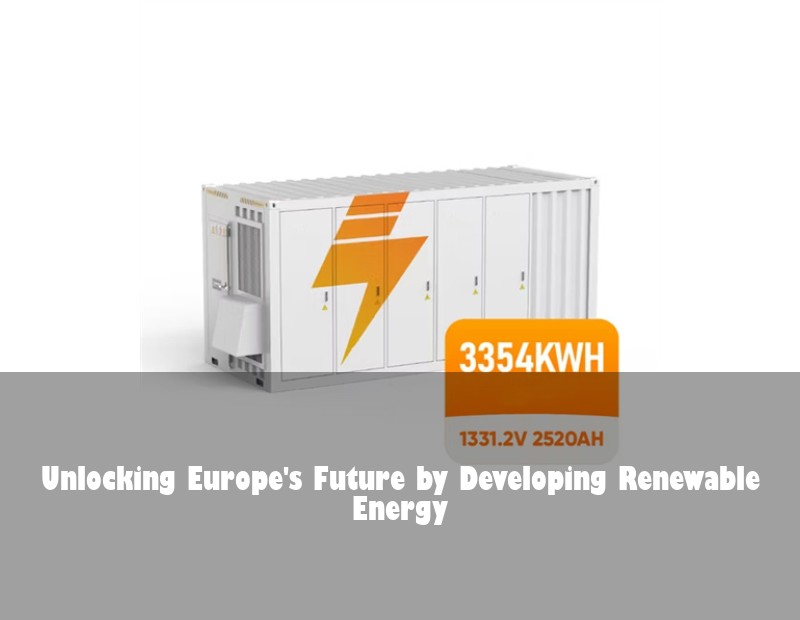
Table of Contents
It's 2030, and your business hasn't received a single volatile energy bill. Why? Because Europe's energy landscape transformed when we committed to developing renewable energy as our bedrock. As a solar technology specialist at Solar Pro, I've witnessed firsthand how nations embracing this shift aren't just cutting carbon – they're future-proofing economies. Let's explore why this isn't merely an environmental choice, but a strategic imperative.
Europe's Energy Crossroads
Remember winter 2022? When gas prices spiked 300%? That wasn't an anomaly – it was a wake-up call. Europe imports over 57% of its energy, creating dangerous vulnerabilities. The European Environment Agency confirms this: Climate-related disruptions cost EU economies €12+ billion annually. But here's what keeps energy ministers awake at night:
- The €1 trillion annual energy import bill draining EU economies
- Grid infrastructure designed for centralized fossil plants, not decentralized renewables
- Public resistance to land-intensive projects slowing deployment

Image: European energy infrastructure challenges | Source: Unsplash
The Solar Acceleration: Data & Trends
Solar isn't coming – it's already here. In 2023 alone, Europe added 41.4 GW of solar capacity – that's equivalent to powering 12.4 million homes! The numbers tell a compelling story:
| Country | 2023 Growth | Cost Reduction (since 2010) |
|---|---|---|
| Germany | +7.9 GW | 89% |
| Spain | +5.6 GW | 85% |
| Netherlands | +4.1 GW | 91% |
Notice the Dutch figures? Their secret lies in integrating solar with agrivoltaics – farming crops under elevated panels. This dual-use approach addresses land concerns while boosting farmer incomes by 30%.
Bavaria's Solar Revolution: A Blueprint
Let me walk you through a real transformation. In 2021, Bavaria faced resistance to large solar farms. Their solution? A community-first model where:
- Residents co-invested in 58 local solar cooperatives
- Battery storage systems were integrated at transformer stations
- Farmers leased land for solar while continuing agriculture

Image: AgriPV system in Bavaria | Source: Unsplash
The results stunned even optimists: By 2023, they'd surpassed their 2030 solar targets, with 92% public approval. Energy bills dropped 22% for participating households – proving community ownership unlocks faster adoption. As Siemens Energy reported, this model is now scaling across Central Europe.
Why Storage is the Missing Puzzle Piece
Here's where many projects stumble: generating solar power is step one, but without storage, excess energy vanishes like sunlight at dusk. Our installations in Sweden demonstrate how battery systems transform economics:
Peak shaving results (Solar Pro + Tesla Powerpack):
- Reduced grid dependency by 76% during winter
- Achieved 98% self-consumption of solar generation
- ROI accelerated by 2.3 years vs storage-less systems
What makes this work? Intelligent energy management systems that predict usage patterns and weather – like having an energy concierge for your business.
Reimagining Energy Infrastructure
Traditional grids resemble one-way highways – power flows from plants to users. Renewable grids? They're interactive networks where every building can be both consumer and producer. Consider Denmark's cell-based grid design:
- Micro-grids balance locally before drawing from main grid
- Blockchain-traded peer-to-peer energy between neighbors
- EV batteries serving as grid buffers during peak demand
This isn't sci-fi – it's operational in Copenhagen's Nordhavn district. As highlighted by IRENA's 2024 report, such systems reduce transmission losses by up to 17% while enhancing resilience.
The Business Imperative Beyond Ethics
"But will this actually improve my bottom line?" I hear this daily. Let's get practical: Our commercial clients now see 5-7 year payback periods thanks to Europe's carbon pricing. That €85/ton CO2 cost? It makes fossil-powered operations financially toxic. Meanwhile, solar+storage installations now deliver:
Financial advantages (EU industrial clients):
- Energy cost predictability for 20+ years
- 40-60% reduction in power expenses by 2028
- Enhanced ESG ratings attracting green investors
So where do we go from here? What's the one energy transformation your organization could implement this quarter to start capitalizing on Europe's renewable revolution?
 Inquiry
 Online Chat