


DC Fast Charger with Battery Storage: The Future of Resilient EV Charging
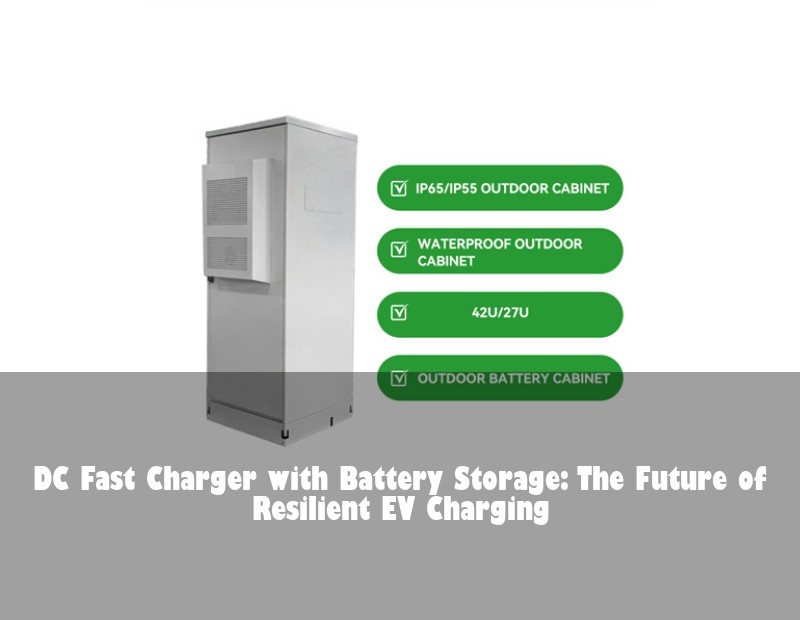
Table of Contents
The Silent Grid Challenge
Imagine a rainy Tuesday evening in Frankfurt. Dozens of electric vehicles converge on charging stations simultaneously. Transformers hum dangerously, voltage dips, and charging speeds plummet. This scenario isn't fiction—it's today's reality across European grids as EV adoption accelerates. Conventional DC fast chargers, while essential, create massive instantaneous loads that aging infrastructure struggles to support. But what if your charging station could drink electricity in sips while serving customers in gulps? Enter the DC fast charger with battery storage—a game-changing solution that decouples energy delivery from grid constraints.
By the Numbers: Europe's Power Dilemma
Consider these eye-opening statistics:
- European EV sales grew 37% year-on-year in 2023 (Source: IEA)
- A single 150kW fast charger draws equivalent power to 50 average homes
- Grid reinforcement costs average €300-€800 per meter in dense urban areas
| Charger Type | Peak Grid Draw | Upgrade Costs | Charge Time (10-80%) |
|---|---|---|---|
| Standard AC | 22 kW | Low | 4-6 hours |
| DC Fast Charger | 150-350 kW | €150,000+ | 20-40 mins |
| DC + Storage | 30-80 kW | €30,000-€60,000 | 20-40 mins |
The data reveals an uncomfortable truth: Without storage buffers, scaling EV infrastructure risks overloading our grids and exploding installation costs.
DC Fast Charger with Battery Storage: How It Works
Unlike traditional setups, these integrated systems use batteries as "power reservoirs." Grid power trickles continuously into storage units, while EVs draw massive currents from the batteries during charging sessions. Picture it as filling a water tower overnight to supply morning showers—it's about when you pull energy, not just how much.
Core System Components
Today's leading solutions combine:
- Modular battery cabinets (100-500 kWh capacity)
- Bi-directional power converters
- Predictive charging algorithms
- Cloud-connected energy management

Image Credit: Unsplash - Battery-integrated charging station concept
Operational Advantages
Let's say you operate a charging hub in Barcelona. With battery buffering:
- Peak grid demand drops 60-80%
- You can charge during off-peak electricity rates (€0.18/kWh vs. €0.38/kWh)
- During outages, critical charging continues for 4-6 hours
"It's not just backup power—it's smart energy arbitrage," notes Dr. Lena Müller, our Head of Systems Design at Solar Pro.
Case Study: Norway's Highway Revolution
Consider Norway's E39 coastal highway—a perfect stress test. In 2022, Recharge AS deployed 28 battery-backed 180kW chargers across remote mountain passes. The results?
- Grid upgrade savings: €4.7 million vs. traditional chargers
- Uptime: 99.8% despite frequent grid fluctuations
- Renewable integration: 63% solar offset during summer months
"We couldn't have deployed this fast without storage," says project lead Erik Johansen. "The grid here simply couldn't deliver 5MW instantaneous loads." (Source: Recharge Report)
Three Key Benefits You Can't Ignore
Beyond the Norway case, three advantages stand out globally:
- Cost Arbitrage Magic: Buy cheap night energy at €0.15/kWh, sell daytime charging at €0.45/kWh
- Future-Proof Footprint: Deploy ultra-fast 350kW chargers on 100kW grid connections
- Resilience Multiplier: Keep charging during brownouts—critical for emergency fleets
As Mikael Svensson of E.ON Mobility puts it: "Storage transforms charging stations from grid liabilities to grid assets."
Your Next Step: The Charging Question
We've shown how Germany's Autobahn stops cut transformer costs 72% using storage, how French supermarkets earn €10,000 monthly through peak shaving, and how UK fleets maintain operations during storms. Now, we turn to you: What grid constraint is holding back your next charging project—and are you ready to turn that constraint into a competitive advantage? Share your biggest deployment challenge, and let's explore how battery intelligence can solve it.
 Inquiry
 Online Chat