


Understanding the Cost to Install Solar Panels: A Smart Investment for Your Home or Business
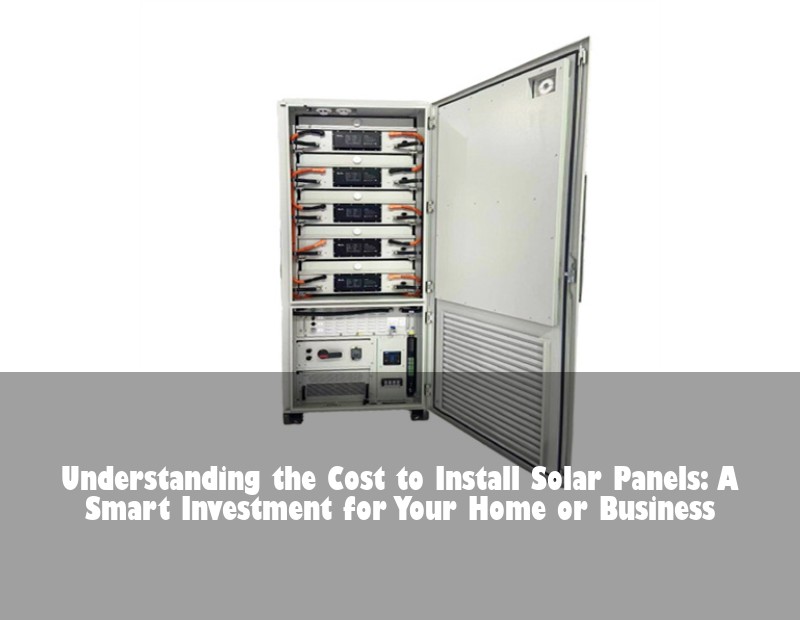
You've likely heard about the benefits of solar power – lower energy bills, reducing your carbon footprint, and gaining energy independence. But the critical question on most minds is: what is the real cost to install solar panels? It's a complex equation influenced by location, system size, technology, and available incentives. This guide demystifies the investment, focusing on the European market, to help you make an informed decision.
Table of Contents
- The Current European Solar Cost Landscape
- Key Factors Affecting Your Installation Cost
- Case Study: Solar PV Installation in Hamburg, Germany
- Strategies to Reduce Your Solar Installation Cost
- Future Trends Impacting Solar Costs
- Is Solar Installation Worth the Cost? Your Questions Answered
The Current European Solar Cost Landscape: Beyond the Sticker Price
Across Europe, the cost to install solar panels varies significantly. While headlines might quote an average cost per kW, reality is more nuanced. Recent data indicates a range:
- Residential Systems (4-8 kW): €1,400 - €2,500 per kW before incentives. This translates roughly to €5,600 - €20,000 total system cost.
- Commercial Systems (10-100 kW+): €1,000 - €1,800 per kW due to economies of scale.
These figures reflect a notable decline of over 60% in the last decade, driven by falling panel prices, improved manufacturing efficiency, and increased installer competition. However, 2022-2023 saw temporary supply chain pressures causing slight increases in some regions, now largely stabilising. Crucially, these upfront numbers rarely tell the whole story. Government incentives (like VAT reductions, feed-in tariffs, grants) and the substantial long-term savings on electricity bills dramatically alter the net investment picture. 
Key Factors Influencing Your Solar Installation Cost
Why such a wide range? Several core elements determine your specific price tag:
- System Size & Complexity: Larger systems cost more upfront but often have a lower cost per kW. Complex roof structures (multiple angles, steep pitch, obstructions) or ground mounts increase labour and material costs.
- Panel & Inverter Technology: Premium, high-efficiency panels or advanced microinverters command higher prices than standard options, but can boost long-term energy yield, especially on constrained roofs. Battery storage adds significant cost (€5,000 - €15,000+) but enhances self-consumption and backup.
- Location & Labour Costs: Installation costs vary by country and region within Europe (e.g., generally higher in Scandinavia vs. Southern Europe). Local labour rates and permit fees also play a role.
- Roof Condition & Accessibility: A roof needing repairs before installation adds cost. Difficult access (e.g., high buildings) can also increase labour time.
- Grid Connection Fees: Fees for grid connection approval and metering changes vary by utility provider.
| System Size (kW) | Typical Price Range (€, before incentives) | Estimated Annual Production (kWh)* |
|---|---|---|
| 4 kW | €5,600 - €10,000 | 3,600 - 4,400 |
| 6 kW | €8,400 - €15,000 | 5,400 - 6,600 |
| 8 kW | €11,200 - €20,000 | 7,200 - 8,800 |
| 10 kW | €12,000 - €22,000+ | 9,000 - 11,000+ |
| *Based on average Central/Southern European irradiation. UK/Nordic yields will be lower. | ||
Case Study: Solar PV Installation in Hamburg, Germany (2023)
Meet the Schneider family. Living in a detached home with a south-facing roof and average electricity consumption of 4,500 kWh/year, they opted for a 7.2 kWp system:
- Components: 18 x 400W Mono PERC panels, 1 x Hybrid Inverter, 5 kWh Battery Storage.
- Gross Installation Cost: €21,800 (approx. €3,028 per kW).
- German Incentives: VAT reduced to 0% (saving ~€4,200), no specific federal grant for pure PV at this scale.
- Net Cost After Incentives: €17,600 (including battery).
- Expected Savings: Reducing grid electricity purchases by 80% (saving ~€1,500/year at current rates). Excess summer production fed into the grid earns ~€0.06/kWh.
- Estimated Payback: Under 12 years, considering rising energy prices and the battery's value for self-sufficiency during outages.
This example highlights how German policies (especially VAT removal) significantly reduce the net cost to install solar panels and accelerate ROI. For current incentives in your specific country, check resources like the European Commission Energy Portal or national energy agencies. 
Smart Strategies to Reduce Your Solar Installation Cost
Feeling overwhelmed? Don't be. You can actively manage your investment:
- Maximize Incentives: This is paramount! Research national, regional, and local grants, tax credits, VAT reductions, and favourable feed-in tariffs. Act quickly – schemes can change or have funding caps. Professional installers are invaluable navigators here.
- Get Multiple Quotes: Obtain 3-5 detailed quotes from reputable MCS (or equivalent national scheme) certified installers. Compare not just price, but component quality, warranties, workmanship guarantees, and projected yields.
- Consider Timing: Installers may offer discounts during traditionally quieter periods (e.g., late autumn/winter, avoiding the spring rush).
- Optimize System Design: Work with your installer to design a system that meets your *actual* energy needs and budget. Maybe a slightly smaller system without a battery initially is optimal, with battery addition later. Ensure panel placement maximizes yield per € spent.
- Group Purchasing: Explore local community solar schemes or "Solarize" campaigns which negotiate bulk discounts for groups of homeowners.
Future Trends: Where is the Cost to Install Solar Panels Heading?
The trajectory for solar remains positive. Industry analysts like IRENA (International Renewable Energy Agency) predict continued, albeit slower, declines in panel and balance-of-system costs through 2030. Key trends influencing future costs include:
- Higher Efficiency Panels: Technologies like TOPCon and HJT will deliver more power from the same roof area, effectively lowering the €/kWh cost.
- Battery Cost Declines: Lithium-ion battery costs are projected to fall significantly (up to 60% by 2030), making solar+storage a standard, more affordable offering.
- Digitalization & Installation Tech: Drones for surveying, AI-powered design software, and new mounting systems aim to reduce soft costs (labour, design, permitting).
- Policy Stability: Supportive, long-term government policies across Europe reduce investor risk and foster competition, further driving down costs.
While panel cost reductions may moderate, the overall value proposition of solar continues to strengthen due to rising retail electricity prices and technological improvements.
Is Solar Installation Worth the Cost? Your Questions Answered
Let's address the elephant in the room. "Yes, but is it *really* worth it for me?" Here's the PAS breakdown:
- Problem: Rising, volatile energy bills, dependence on the grid, and carbon guilt.
- Agitate: Locking into decades of unpredictable and likely increasing costs? Facing potential power disruptions? Missing out on controlling your own energy future?
- Solution: Solar panels offer a tangible solution. The upfront cost to install solar panels is an investment in predictable, clean energy for 25+ years, significantly reducing or eliminating your grid electricity purchases. Incentives drastically improve the payback period. Your home value increases. You gain resilience.
While the initial investment requires careful consideration, the long-term financial, environmental, and security benefits make solar a compelling proposition for most European homeowners and businesses facing moderate to high electricity costs.  *Image Source: Representative image of homeowner satisfaction*
Ready to See Your Exact Savings?
The best way to understand the specific cost to install solar panels on *your* property and calculate your potential savings is to get a personalized assessment. What unique energy challenges does your home or business face that solar could solve today?
 Inquiry
 Online Chat