


Commercial Solar Energy Storage: Powering Europe's Business Resilience
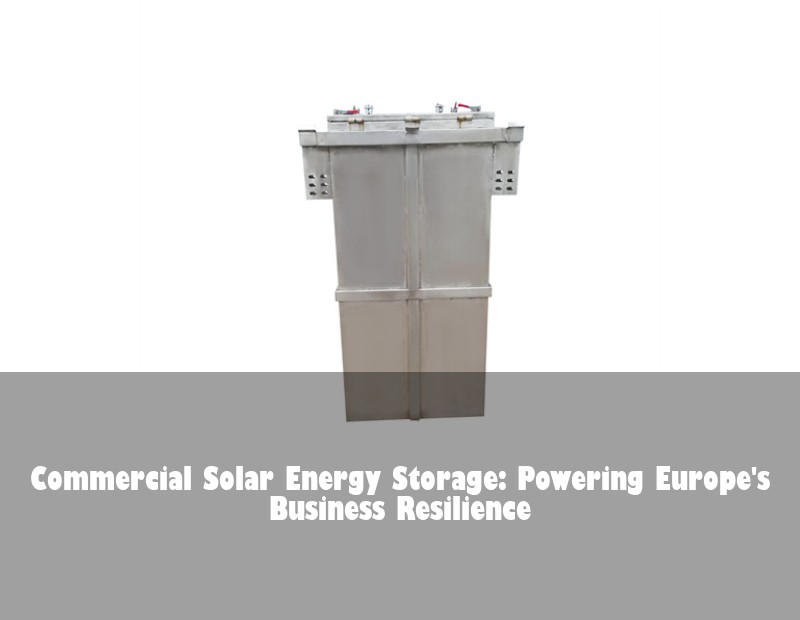
As energy prices surge across Europe, forward-thinking businesses are discovering a game-changing solution: commercial solar energy storage. Picture this – your manufacturing facility keeps humming during grid blackouts, your supermarket refrigerators stay cold through peak pricing hours, and your office complex slashes energy bills while shrinking its carbon footprint. This isn't futuristic dreaming; it's today's reality for enterprises leveraging solar + storage systems. In this article, we'll explore how this technology transforms energy from a cost center into a strategic asset.
Table of Contents
- Europe's Energy Crisis: The Burning Platform
- How Commercial Solar Storage Works (Simplified)
- German Supermarket Case Study: 63% Energy Cost Reduction
- Financial Benefits: Beyond Basic ROI
- Overcoming Implementation Barriers
- What's Next for Solar Storage?
Europe's Energy Crisis: The Burning Platform
Remember when energy was just... there? European businesses don't. Since 2021, commercial electricity prices have skyrocketed by 200-400% in key markets like Germany and France. But here's what keeps facility managers awake at night:
- Grid instability causing €150,000+/hour downtime for mid-sized factories
- Peak demand charges consuming up to 50% of energy budgets
- Carbon taxes adding €40-90/tonne to operational costs
"We're not just paying for energy anymore," notes Lars Bergström, sustainability director at a Swedish industrial group. "We're paying for risk mitigation."

How Commercial Solar Storage Works (Simplified)
Think of commercial solar storage as your energy Swiss Army knife. During sunny hours, solar panels generate electricity while batteries store excess energy. When clouds roll in or grid prices spike, the system intelligently switches to battery power. Modern setups like Tesla Megapack or BYD Battery-Box Premium handle this dance automatically through AI-driven controllers.
| Component | Function | Business Impact |
|---|---|---|
| PV Arrays | Convert sunlight to DC electricity | Primary energy generation |
| Bidirectional Inverters | Convert DC↔AC & manage grid interaction | Seamless grid-battery switching |
| Lithium-Ion Batteries | Store 50-1000+kWh of energy | Peak shaving & backup power |
| Energy Management System | AI-driven optimization | Maximizes financial returns |
German Supermarket Case Study: 63% Energy Cost Reduction
Let's examine REAL results from Munich-based retailer BioMarkt:
- Challenge: €18,000/month energy bills + frequent refrigeration outages
- Solution: 120kW solar array + 300kWh battery storage
- Results (12-month data):
- 63% reduction in grid electricity consumption
- Complete refrigeration uptime during 3 grid failures
- €7,200/month average energy savings
- 4.2-year ROI (beating projections by 11 months)
"The system pays for itself while we sleep," says CEO Anika Vogel. "Most importantly, we've guaranteed food safety during blackouts." Source: Fraunhofer ISE Study
Financial Benefits: Beyond Basic ROI
While solar storage delivers clear operational savings, savvy European businesses unlock three-tiered value:
- Direct Savings: Slash peak demand charges by 30-70% through strategic battery deployment
- Revenue Streams: Participate in grid-balancing programs like UK's Dynamic Containment (earning €45,000/MW/year)
- Asset Protection: Prevent €500k+ losses from data corruption during outages
Consider this: A 500kW system in Spain now qualifies for EU Renovation Wave grants covering 35% of installation costs.
Overcoming Implementation Barriers
"This sounds great, but..." I hear you say. Let's address common concerns head-on:
- "Our roof space is limited!" → New bifacial panels generate 25% more power/sq meter
- "Batteries won't last!" → Modern LFP chemistry guarantees 10+ year performance
- "Too complex to manage!" → Remote monitoring handles 90% of operations
As Copenhagen-based installer TechSolv demonstrates, phased rollouts let businesses start small – a single warehouse section or production line – then scale system-wide.

What's Next for Solar Storage?
Emerging innovations will further boost commercial viability:
- Second-life EV batteries reducing storage costs by 40%
- Blockchain-enabled peer-to-peer energy trading between businesses
- AI predicting energy patterns with 95%+ accuracy
But here's my question for you: As energy volatility becomes Europe's "new normal," can your business afford to treat power as a passive expense rather than an active asset? What would energy independence look like for your operations?
 Inquiry
 Online Chat