


Unlock the Future with Cheap Solar Energy Storage
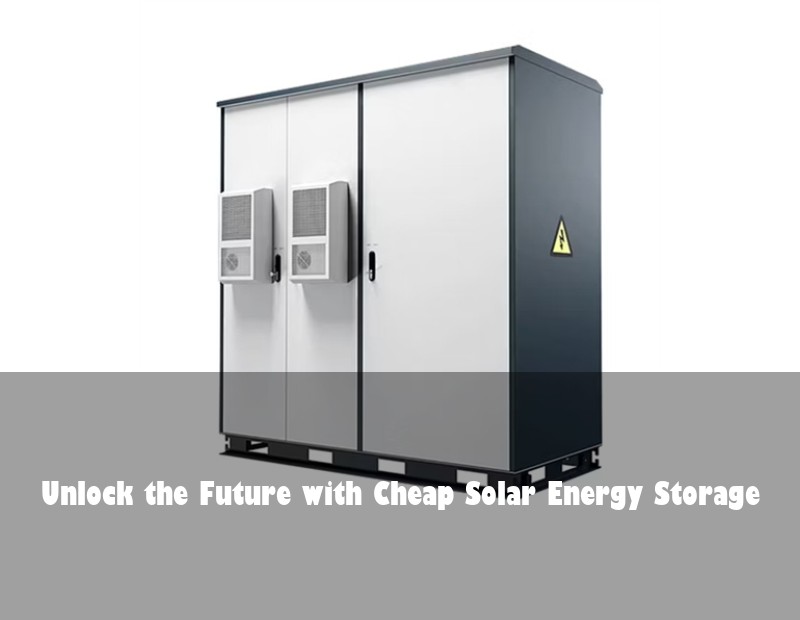
Table of Contents
The Global Demand for Affordable Solar Storage
You've installed solar panels, but when the sun sets, you're still buying expensive grid electricity. This daily frustration is driving homeowners and businesses worldwide to seek cheap solar energy storage solutions. Across Europe, energy prices have surged by 60-150% since 2021 (Eurostat), making payback periods for storage systems shorter than ever. The question isn't whether to store solar energy, but how to do it cost-effectively.
The Economics Behind Falling Storage Costs
What's making cheap solar energy storage a reality? Three key factors:
- Lithium-ion battery prices dropped 89% from 2010-2023 (BloombergNEF)
- Manufacturing scale increased 200-fold since 2015
- New battery chemistries like LFP (Lithium Iron Phosphate) cut material costs by 30%

Source: Unsplash - Solar battery installation
Consider this: In 2015, storing 1kWh cost ≈€800. Today, it's below €200. That's not just incremental change – it's a revolution enabling households to achieve energy independence for under €5,000.
Case Study: Germany's Residential Storage Boom
Germany exemplifies the cheap solar energy storage transformation. Through their KfW development bank, the government offered subsidies covering up to 30% of storage costs. The results?
| Year | Installed Systems | Average Cost/kWh | Self-Consumption Rate |
|---|---|---|---|
| 2018 | 85,000 | €1,150 | 35% |
| 2023 | 220,000+ | €680 | 68-82% |
Data source: Fraunhofer ISE
Berlin homeowner Anika Schmidt shared: "Our 8kWh system cost €6,200 after subsidies. It cut our grid imports by 80% – we break even in under 7 years." This isn't isolated; similar trends are emerging in Italy, Spain, and France.
Key Technologies Driving Affordability
The new generation of storage solutions focuses on simplicity and longevity:
Battery Innovations
- LFP batteries lasting 8,000+ cycles
- DC-coupled systems avoiding unnecessary energy conversion
- Modular designs allowing capacity upgrades
Smart Management Systems
Advanced algorithms like predictive charging – using weather data to optimize storage levels – can boost savings by 15%. As SolarPro Tech Lead Marco Bertolini notes: "It's not just about storing energy, but storing it intelligently at minimal cost."
Maximizing Savings with Solar + Storage
How do real savings stack up? Compare these EU scenarios:

Source: Unsplash - Energy monitoring
- Spain: €0.38/kWh grid rate vs. €0.08 solar storage cost
- UK: Typical 4-bed home saves €920/year with 10kWh storage
- Sweden: 80% winter self-sufficiency using hybrid solar/storage systems
The secret? Pair storage with time-of-use tariffs. Store solar when rates are low, discharge during peak hours – sometimes creating value gaps of €0.25/kWh.
Overcoming Adoption Barriers
Despite progress, hurdles remain. Let's address them head-on:
Myth: "Storage is too expensive"
Reality: With current payback periods of 6-9 years and 15-year warranties, modern systems outlive their payback period. Consider it a high-yield energy bond.
Regulatory Challenges
Countries like Portugal now exempt storage systems from double taxation. The EU's Clean Energy Package mandates simpler grid connection processes – a game-changer for installers.
What's Next for Solar Storage?
Emerging technologies promise even cheaper storage:
- Solid-state batteries (50% more density, 40% lower cost)
- Recycled EV batteries providing second-life storage at 60% discount
- Virtual power plants aggregating home storage to sell grid services
With European storage deployments projected to grow 400% by 2030 (IEA), one thing's clear: cheap solar energy storage isn't a dream – it's today's reality.
 Inquiry
 Online Chat