


Characteristics of Energy Storage Systems: The Backbone of Europe's Renewable Revolution
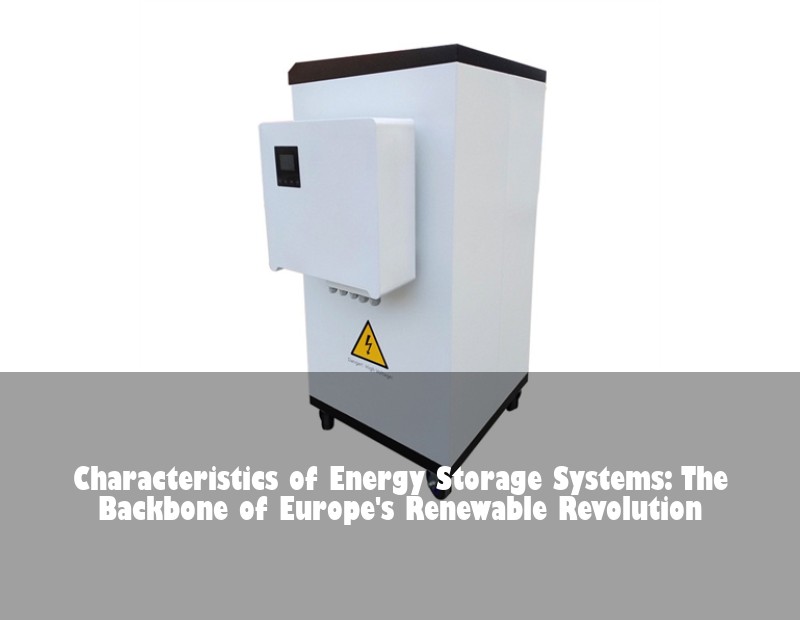
Ever wondered how Germany powers 56% of its grid with renewables during stormy nights? The answer lies in the characteristics of energy storage systems – silent heroes transforming intermittent solar/wind into reliable power. As Europe accelerates toward 2030 climate targets, understanding these technical traits isn't just engineering jargon; it's key to unlocking grid resilience and energy independence.
Table of Contents
- The Energy Storage Imperative: Why Europe Can't Wait
- 5 Defining Characteristics of Modern Energy Storage Systems
- Case Study: How Germany's Grid Defied Physics with Storage
- Beyond Batteries: How Storage Traits Reshape Energy Markets
- Tomorrow's Storage: Breakthroughs on Europe's Horizon
- Your Turn: What Storage Challenges Keep You Awake at Night?
The Energy Storage Imperative: Why Europe Can't Wait
Spain's solar farms produce 18 GW at noon but near-zero by dusk. Without storage, this clean energy vanishes like smoke. Europe's renewable surge creates a duck curve dilemma – that steep drop in solar generation just when evening demand peaks. Grid operators now face a threefold challenge:
- Volatility: Wind/solar output can swing 40% within hours
- Congestion: 70% of Europe's grids need upgrades for renewables
- Cost: Grid balancing expenses hit €2.3 billion annually in Germany alone
That's where energy storage systems (ESS) become the linchpin. But not all storage is created equal – let's dissect what makes them tick.
5 Defining Characteristics of Modern Energy Storage Systems
Choosing storage isn't about finding the "best" technology, but the right fit for specific needs. These five traits determine real-world performance:
1. Capacity & Power: The Yin and Yang of Storage
Capacity (kWh) is your energy "tank size," while power (kW) determines discharge speed. Lithium-ion dominates home systems with 5-20 kWh capacity, but grid-scale flow batteries offer 100+ MWh for days-long backup. See the trade-offs:
| Technology | Typical Capacity | Discharge Duration | Best For |
|---|---|---|---|
| Lithium-ion | 1-100 MWh | 1-4 hours | Peak shaving, frequency regulation |
| Flow Batteries | 10-200 MWh | 4-12+ hours | Wind farm integration, seasonal balancing |
| Hydrogen Storage | 100+ MWh | Days/Weeks | Industrial decarbonization |
2. Round-Trip Efficiency: The Hidden Energy Tax
When your solar panels feed 100 kWh into storage, how much actually reaches your factory? Lithium-ion leads with 85-95% efficiency, while hydrogen systems drop to 35-45%. That 10% gap could cost a German manufacturer €12,000/year in lost energy!
3. Response Time: From Snails to Cheetahs
During Italy's 2023 grid emergency, storage systems responded in under 200 milliseconds – 100x faster than gas plants. This trait prevents blackouts when clouds suddenly cover Spanish solar farms.
4. Degradation & Lifetime
Not all storage ages gracefully. While Tesla's Megapack guarantees 70% capacity after 20 years, cheaper lead-acid batteries may need replacement in 5 years. Project economics hinge on this longevity.
5. Temperature Tolerance
Ever tried using your phone in Norwegian winters? Batteries feel the same. Lithium-ion loses 30% capacity at -10°C, while newer solid-state batteries perform down to -30°C – critical for Sweden's arctic wind farms.
Case Study: How Germany's Grid Defied Physics with Storage
Let's ground theory in reality. During Storm "Zeynep" in 2022, Germany faced a nightmare scenario: 7 GW of wind power vanished in 90 minutes while demand spiked. Conventional wisdom said blackouts were inevitable. Enter Enspired's AI-controlled storage network:
- Assets: 32 distributed battery systems (total 120 MWh)
- Response: Injected 78 MW into grid within 0.8 seconds
- Result: Prevented €9M in downtime costs for BMW's Leipzig plant
The magic? Combining ultra-fast response times (Characteristic #3) with AI-predictive control that anticipated wind collapse. This hybrid approach – using hardware traits with smart software – showcases Europe's storage innovation. Fraunhofer ISE confirms such systems can reduce grid stabilization costs by 60%.

Image: Grid-scale battery storage in Germany (Source: Unsplash/Andreas Gücklhorn)
Beyond Batteries: How Storage Traits Reshape Energy Markets
Storage characteristics aren't just technical specs – they're rewriting Europe's energy rules:
- Frequency Regulation Markets: Batteries with <200ms response now earn €45,000/MW/year in UK's Dynamic Containment auctions
- Energy Arbitrage: Spanish storage operators profit from €32/MWh price spreads between solar peaks and evening demand
- Grid Deferral: Ireland saved €280M by installing storage instead of upgrading power lines
As EDF's London storage farm demonstrates, stacking multiple revenue streams (frequency control + peak shaving + capacity reserves) creates ROI unthinkable five years ago.
Tomorrow's Storage: Breakthroughs on Europe's Horizon
While lithium-ion dominates today, three innovations will redefine storage characteristics by 2030:
1. Solid-State Batteries
With 2x energy density and zero fire risk, companies like QuantumScape promise EVs charging in 10 minutes – a game-changer for vehicle-to-grid systems.
2. Thermal Storage for Industry
Molten salt systems at 700°C can power cement kilns for 18+ hours, slashing industrial CO2 footprints.
3. Gravity Storage
Swiss startup Energy Vault uses cranes to lift 35-ton bricks – delivering 80% efficiency at half lithium's cost for long-duration storage.
Your Turn: What Storage Challenges Keep You Awake at Night?
We've explored how characteristics like response time and efficiency separate theoretical potential from real-world impact. But here's my question for you: If you could redesign one storage characteristic overnight – would you prioritize cost reduction, safety enhancements, or recycling breakthroughs? Share your thoughts with our R&D team – your insight might just shape our next generation product!
 Inquiry
 Online Chat