


Best Solar Panel Setup for Home: Your Path to Energy Independence
As energy prices soar across Europe, homeowners like you are seeking smarter solutions. The quest for the best solar panel setup for home isn't just about saving money—it's about taking control of your energy future while shrinking your carbon footprint. In this guide, we'll cut through the noise and show you how to design a system that delivers maximum returns, whether you're in sunny Spain or cloud-prone Germany.
Table of Contents
- Why Your Solar Setup Choice Matters More Than Ever
- Key Components of an Optimal Home Solar System
- Case Study: A Real German Home's Solar Success
- How to Select Solar Panels for European Conditions
- Energy Storage: The Game-Changer for European Homes
- Intelligent Energy Management for Peak Efficiency
- Your Solar Journey: Where to Begin
Why Your Solar Setup Choice Matters More Than Ever
European households face a perfect storm: electricity prices increased by 32% between 2021-2023, while grid reliability concerns grow. Yet many homeowners discover their underperforming systems generate 20% less energy than projected. Why? Cookie-cutter installations ignore three critical factors:
- Regional climate variations: Solar yield differs 40% between southern and northern Europe
- Energy consumption patterns: Night-heavy usage requires different solutions than daytime loads
- Local regulations: Feed-in tariffs vary significantly across EU countries
Key Components of an Optimal Home Solar System
The Foundation: Solar Panels That Work With Your Roof
Not all panels are equal. Monocrystalline modules now achieve 22%+ efficiency—crucial for limited roof space. For tile roofs common in Mediterranean homes, lightweight bifacial panels can increase yield by 11% through reflected light capture.
Brain of the System: Hybrid Inverters
Modern inverters do more than convert DC to AC. Smart hybrid models like the Huawei SUN2000 integrate battery management and grid interaction, allowing you to:
- Prioritize self-consumption during peak rate hours
- Sell surplus energy automatically when tariffs are favorable
- Provide backup power during outages (critical in areas with unstable grids)
The Efficiency Multiplier: DC Optimizers
These micro-devices attached to each panel combat shading and mismatch issues. In partial-shade conditions, they can recover up to 25% of lost production compared to traditional string systems.
| Component | Basic System | Optimized System | Impact on ROI |
|---|---|---|---|
| Panels | Standard polycrystalline | Monocrystalline + bifacial | +15-20% energy yield |
| Inverter | Standard string | Hybrid with smart features | +12% self-consumption |
| Add-ons | None | DC optimizers | +8-25% shade recovery |
Case Study: A Real German Home's Solar Success
Meet the Hoffmann family in Munich. Facing electricity costs of €0.42/kWh, they installed an 8.2kW system in 2022 with these optimized components:
- 24x LONGi Hi-MO 5m modules (410W each)
- SMA Sunny Boy Storage inverter
- 10kWh BYD battery
- Tigo TS4 optimizers
 Image: Typical German residential solar installation. Credit: Unsplash/Photographer Name
- Energy self-sufficiency: 92% in summer, 73% in winter
- Annual savings: €1,940 (compared to pre-solar bills)
- Payback period: Estimated at 6.8 years
- Carbon reduction: 4.2 tonnes/year
How to Select Solar Panels for European Conditions
Panel choice dramatically affects long-term performance. Consider these region-specific factors:
For Northern Europe (UK, Scandinavia)
- Prioritize low-light performance: Look for panels with >85% efficiency retention at 200W/m² irradiance
- Snow load rating: Ensure modules withstand ≥ 5400Pa pressure
- Example: REC Alpha Pure Series handles diffuse light exceptionally
For Mediterranean Regions
- Heat tolerance: Choose panels with temperature coefficients ≤ -0.35%/°C
- Anti-reflective coating: Boosts yield by 3% in high-sun areas
- Example: Qcells Q.PEAK DUO perform well in high temperatures
Energy Storage: The Game-Changer for European Homes
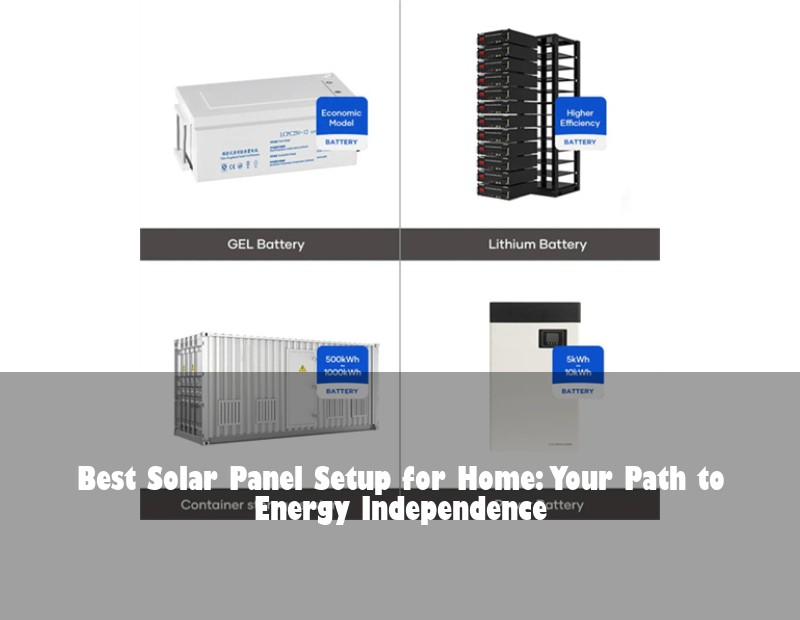
Batteries transform solar from a daytime solution to 24/7 energy security. With European feed-in tariffs dropping below €0.08/kWh in some regions, storing surplus energy instead of selling it can double your savings. The sweet spot? Sizing your battery to cover evening consumption (typically 4-10kWh).
Lithium iron phosphate (LIFePO4) batteries now dominate the market for good reason:
- Cycle life: 6,000+ cycles vs. 1,500 in older lead-acid
- Depth of discharge: 90% usable capacity
- Space efficiency: 70% smaller footprint than equivalent lead-acid
Intelligent Energy Management for Peak Efficiency
The true magic happens when components communicate. Systems like SolarEdge's Energy Hub automatically:
- Direct solar power to your electric vehicle during daylight
- Preheat water when surplus generation exceeds 1.5kW
- Limit export during low-tariff periods
In Danish trials, such intelligence boosted self-consumption from 30% to 70% in households with EVs.
Your Solar Journey: Where to Begin
Ready to explore your personalized solar solution? Ask yourself these key questions:
- What percentage of my current electricity bill do I want to eliminate?
- Do I have backup power needs for critical appliances?
- How might my energy consumption evolve (EV purchase, heat pump, etc.)?
Most European homeowners start with a professional solar assessment—many providers offer free remote evaluations using satellite imagery and your historical consumption data. Why not request one today and see what your roof could truly deliver?
 Inquiry
 Online Chat