


Finding the Best Residential Solar Power System for European Homes
As energy prices soar across Europe and climate commitments intensify, homeowners are increasingly asking: "How do I choose the best residential solar power system?" The answer blends technology, economics, and sustainability – transforming rooftops into power stations while slashing electricity bills. Let’s explore what makes a system truly exceptional.
Table of Contents
- Europe’s Solar Surge: Why Homeowners Are Switching
- Anatomy of the Best Residential Solar Power System
- Case Study: A Munich Family’s Energy Transformation
- Future-Proofing Your Solar Investment
- Your Solar Journey Starts Here
Europe’s Solar Surge: Why Homeowners Are Switching
An average European household faces €2,000+ annual electricity costs (Eurostat, 2023), while heatwaves and policy shifts highlight energy vulnerability. Now consider the solar solution:
- Residential solar installations grew 35% YoY across the EU in 2023 (SolarPower Europe)
- Germany alone added 1.3 million home solar systems last year
- Modern systems can cover 70-90% of a home’s energy needs when paired with storage
We’re witnessing a fundamental shift – from passive consumers to proactive energy producers. But what distinguishes a truly superior system?
Anatomy of the Best Residential Solar Power System
The optimal system balances four pillars:
1. Precision-Engineered Solar Panels
Top-tier monocrystalline panels now exceed 22% efficiency – a 40% improvement over 2010 models. Consider bifacial designs that capture reflected light, boosting yields by up to 15% in snowy or coastal areas.
2. Intelligent Battery Storage
Lithium iron phosphate (LFP) batteries dominate premium systems. With 6,000+ charge cycles and 10-year warranties, they enable energy independence during peak tariffs and outages.
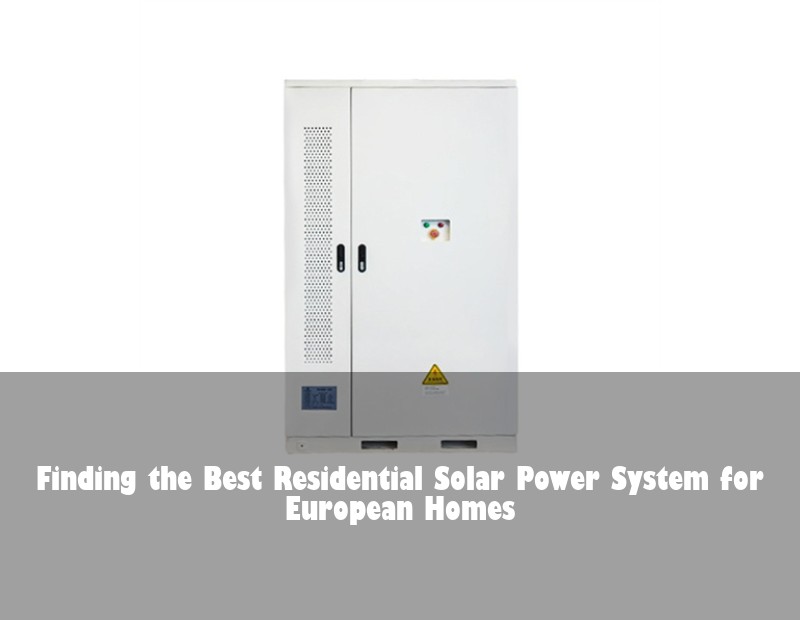
 Image: Residential solar storage unit (Source: SolarTech Magazine)
3. Smart Energy Management
AI-driven controllers like SolarEdge Home Hub dynamically allocate power between appliances, EV chargers, and storage. One Swedish study showed these systems reduce grid dependence by 63%.
4. Hybrid Inverter Technology
Modern inverters convert DC to AC with 98% efficiency while managing grid interactions. Look for models with grid-assist features that comply with EU’s Renewable Energy Directive.
| Component | Standard System | Premium System |
|---|---|---|
| Panel Efficiency | 18-20% | 22%+ |
| Battery Cycle Life | 3,000 cycles | 6,000+ cycles |
| Energy Management | Basic monitoring | AI optimization |
| Payback Period | 7-10 years | 5-7 years |
Case Study: A Munich Family’s Energy Transformation
The Vogelhaus in Bavaria exemplifies peak performance:
- System: 8.4kW solar array + 15kWh LFP battery
- Climate: 1,150 kWh/m² annual irradiation (Bavarian average)
- Results:
- 94% energy self-sufficiency in summer months
- €1,800 annual savings vs. grid electricity
- 6.2-year payback with Germany’s KfW incentives
"Our system generates 9,200 kWh yearly – enough to power our home and charge our EV," reports homeowner Felix Vogel. "During February’s grid instability, we didn’t notice any disruption."
Future-Proofing Your Solar Investment
The best systems anticipate tomorrow’s needs:
- EV Integration: 11kW EV chargers now sync with solar controllers
- V2H (Vehicle-to-Home): New Nissan and Hyundai models feed power back during peaks
- Blockchain Energy Trading: Pilots in Portugal let homeowners sell excess solar via apps
As EU’s Solar Rooftop Initiative mandates solar on new buildings by 2029, early adopters gain financial and ecological advantages.
Your Solar Journey Starts Here
The quest for the best residential solar power system begins with your roof’s potential and energy patterns. Consider this: What would energy independence mean for your household budget and peace of mind during Europe’s next energy crunch? Our team at Solar Pro offers customized assessments – why not discover your home’s solar potential today?
 Inquiry
 Online Chat