


The Critical Role of Battery Storage for Power Grid Stability
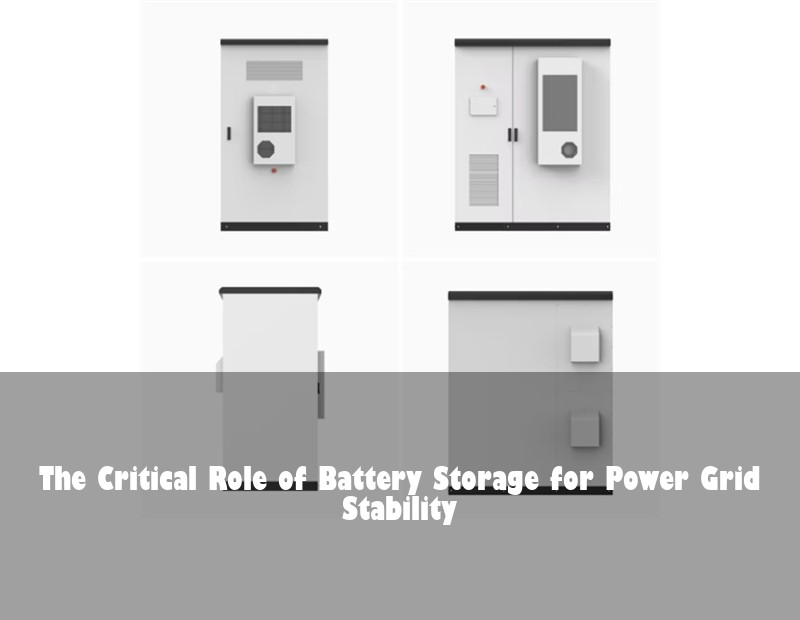
Imagine a world where blackouts are relics of the past, and renewable energy flows seamlessly into homes 24/7. This vision hinges on one game-changing technology: battery storage for power grid systems. As Europe accelerates its clean energy transition, grid operators face unprecedented volatility. Solar and wind generation fluctuate wildly, creating instability that threatens everything from factory operations to hospital power supplies. But what if we could bottle sunshine and store gusts of wind? That’s precisely the promise of grid-scale batteries—transforming renewable energy from an intermittent resource into a reliable backbone. Let’s explore how this technology is reshaping Europe’s energy landscape.
Table of Contents
- The Grid Instability Crisis: Why Renewables Need Backup
- By the Numbers: Europe’s Battery Storage Boom
- Case Study: How the UK’s Hornsea Project Solved Grid Congestion
- Beyond Backup: 5 Unexpected Benefits of Grid Batteries
- What’s Next? AI, Second-Life Batteries & Policy Shifts
- Your Turn: Is Your Grid Ready for the Storage Revolution?
The Grid Instability Crisis: Why Renewables Need Backup
Europe’s aggressive renewable rollout has an inconvenient truth: sunshine and wind are unreliable teammates. When Germany’s wind generation plummeted 40% during a 2023 winter calm, operators scrambled to fire up coal plants. This volatility causes three critical headaches:
- Frequency Drops: Sub-second power mismatches can trigger cascading failures
- Congestion Costs: Germany paid €1.4B in 2022 to curtail excess renewable energy
- Backup Dependence: Fossil peaker plants emit 30% more CO₂ than baseload units
Battery storage acts as a shock absorber—charging during surplus periods and discharging during shortages. Think of it as a "buffer" that smooths out the jagged edges of renewable generation.
By the Numbers: Europe’s Battery Storage Boom
Investment trends reveal a seismic shift. Check Europe’s storage growth trajectory:
| Metric | 2021 | 2023 | 2025 (Projected) |
|---|---|---|---|
| Installed Capacity | 3.2 GWh | 14.7 GWh | 42.9 GWh |
| Market Value | €1.1B | €4.3B | €12.6B |
| Grid Response Time | Minutes | Milliseconds | Sub-100ms |
Source: European Energy Storage Association. This acceleration isn’t just about capacity—it’s about economics. Battery costs have fallen 89% since 2010, making storage competitive with gas peakers.
Case Study: How the UK’s Hornsea Project Solved Grid Congestion
Nothing proves battery storage for power grid applications like real-world success. Consider the Hornsea Wind Farm off England’s coast:
 Photo: Ørsted
- Challenge: 1.4 GW wind farm overwhelmed local grids during peak output
- Solution: 100 MW/120 MWh Tesla Megapack installation (2022)
- Results:
- Reduced curtailment by 76%
- £9M/year in saved constraint payments
- 4,000+ homes powered during evening peaks
"The batteries act like a pressure valve," explains Ørsted’s lead engineer. "We store midday oversupply and release it at 6 PM when kettles boil nationwide." This project exemplifies how storage transforms renewable assets from grid liabilities to stability anchors.
Beyond Backup: 5 Unexpected Benefits of Grid Batteries
While blackout prevention grabs headlines, batteries deliver multidimensional value:
- Frequency Regulation: Respond 100x faster than thermal plants to grid fluctuations
- Voltage Support: Prevent brownouts in remote areas with weak transmission
- Deferred Upgrades: Delay €500M+ substation investments by managing local peaks
- Energy Arbitrage: Buy low-cost off-peak power, sell during €200/MWh price spikes
- Carbon Shaving: Enable coal-to-renewable switching without reliability trade-offs
Spain’s recent grid analysis showed that every 100 MW of storage reduces fossil reserve requirements equivalent to taking 28,000 cars off roads.
What’s Next? AI, Second-Life Batteries & Policy Shifts
The next frontier blends hardware with predictive intelligence. Enel’s Italian projects now use machine learning to forecast solar dips 90 minutes ahead—pre-charging batteries before clouds arrive. Meanwhile, Volkswagen and Northvolt are repurposing EV batteries into grid storage, cutting costs by 40% while extending battery lifespans. Regulatory shifts are equally crucial: Germany’s new Energy Storage Strategy waives double taxes for storage systems, mirroring incentives that propelled solar adoption.
Your Turn: Is Your Grid Ready for the Storage Revolution?
As Europe races toward 2030 renewables targets, one question looms: How will your organization harness battery storage to turn grid volatility into competitive advantage? Could your microgrid benefit from a Tesla Megapack, or might your utility leverage AI-driven storage to avoid costly upgrades? Share your biggest grid challenge below—let’s brainstorm solutions together.
 Inquiry
 Online Chat