


Unlock Grid Resilience with a Smart Battery Energy Management System
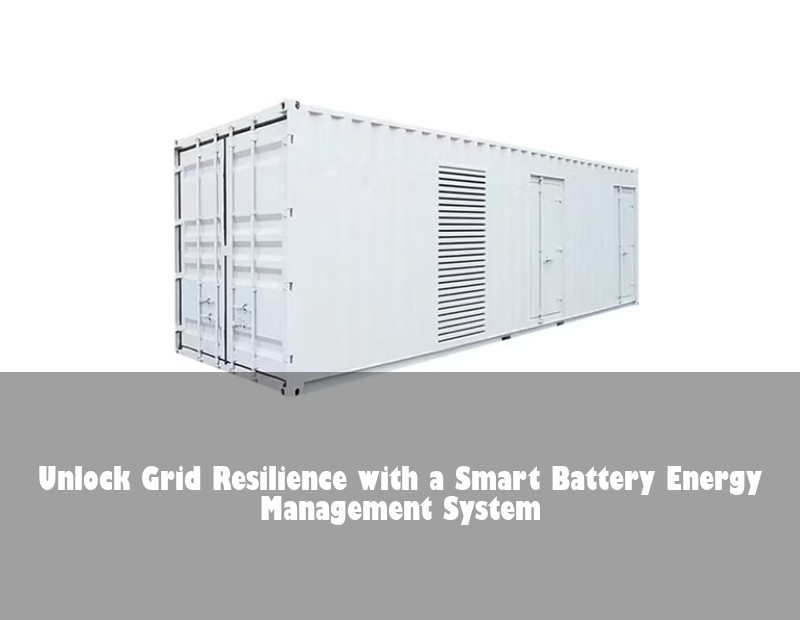
Table of Contents
- The Renewable Energy Challenge in Europe
- What Exactly is a Battery Energy Management System?
- 4 Core Capabilities of Modern BEMS
- German Success Story: Grid Stability in Bavaria
- Practical Integration Tips for Solar+Storage Projects
Imagine your solar panels generating surplus energy during a sunny afternoon – only to see it vanish unused. Across Europe, this frustrating scenario plays out daily as renewable adoption accelerates. Germany alone wasted 6.5 TWh of clean energy in 2022 due to grid constraints. But what if you could capture every kilowatt-hour intelligently? Enter the battery energy management system (BEMS) – the technological brain transforming passive storage into active grid assets. As Europe targets 45% renewable energy by 2030, these systems aren't just useful; they're becoming essential infrastructure.
The Renewable Energy Challenge in Europe
Europe's energy transition faces a critical roadblock: intermittency. While solar installations grew 35% YoY across the EU, grid operators struggle with dramatic supply fluctuations. Consider these 2023 data points:
| Country | Renewable Curtailment | Peak Demand Variability |
|---|---|---|
| Germany | 5.8% of solar potential | ±40% within 24h |
| Spain | 4.2% of wind potential | ±35% within 24h |
Without dynamic balancing, this volatility forces fossil-fuel backups and drives electricity prices 22% higher during peak events. As one Amsterdam grid engineer told us: "We're building solar highways with bicycle lanes for storage."

European energy grids require intelligent balancing (Source: Unsplash/Photographer: American Public Power Association)
What Exactly is a Battery Energy Management System?
Think of a BEMS as the orchestra conductor for your energy assets. Unlike basic battery controllers, modern systems combine hardware sensors and AI-driven software to:
- Predict generation/demand patterns using weather APIs
- Optimize charge cycles based on real-time electricity pricing
- Prevent battery degradation through adaptive algorithms
When a UK school district implemented BEMS across 12 campuses, their battery lifespan increased by 27% while earning £18,000 annually from grid-balancing services. As Solar Pro's lead engineer Elena Rossi notes: "The magic isn't in storing energy – it's in knowing precisely when and how to deploy it."
4 Core Capabilities of Modern BEMS
Not all management systems are created equal. Top-tier solutions like Solar Pro's GridMind platform offer:
- Predictive Optimization: Machine learning analyzes historical data to anticipate usage spikes
- Multi-Market Participation: Automatically switch between energy arbitrage and frequency regulation
- Degradation Monitoring: Track cell-level health to extend warranties
- Cybersecurity Protocols: IEC 62443 compliance for grid-connected systems
These features deliver tangible ROI – our clients typically see payback periods under 4 years in markets with dynamic pricing like Italy's TERNA grid.
German Success Story: Grid Stability in Bavaria
When the Bavarian village of Wildpoldsried faced transformer overloads from its 500% renewable surplus, they deployed a BEMS-controlled 4.8 MWh storage system. The results?
- Grid congestion reduced by 91%
- €220,000 annual revenue from primary control reserve
- Battery lifetime extended to 12 years
"Before installation, we spilled enough energy annually to power 600 homes," explains Mayor Günter Mögele. "Now our storage system pays its own lease through active grid services." The project's success has inspired similar deployments across Fraunhofer ISE's partner network.

Commercial-scale BEMS installations stabilize local grids (Source: Unsplash/Photographer: American Public Power Association)
Practical Integration Tips for Solar+Storage Projects
Based on 120+ European deployments, we recommend:
| Project Size | Critical BEMS Features | ROI Boosters |
|---|---|---|
| Residential (<10kWh) | Price-driven automation | Time-of-use optimization |
| Commercial (50-200kWh) | Multi-stack management | Grid service participation |
| Utility-scale (>1MWh) | Reactive power control | Ancillary market access |
Remember: Your BEMS should evolve with regulations. New EU grid codes require ENTSO-E compliance for frequency response – future-proofing matters!
Ready to Transform Your Energy Assets?
What could your organization achieve with a battery system that doesn't just store energy, but actively works to maximize its value? Let's explore how intelligent energy management could turn your solar investment into a grid resilience powerhouse.
 Inquiry
 Online Chat