


50 kWh Lithium Ion Battery: Your Gateway to Energy Independence in Europe
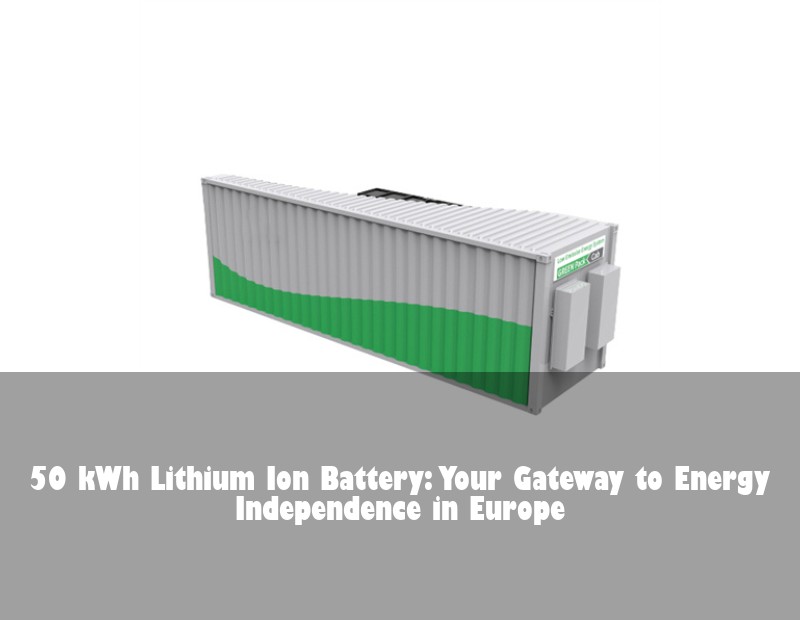
Table of Contents
- Introduction: The Energy Storage Revolution
- Why 50 kWh Lithium Ion Batteries Are Reshaping Europe's Energy Landscape
- Technical Superiority: Inside the 50 kWh Lithium Ion Battery
- Real-World Impact: Berlin Commercial Park Case Study
- Beyond Backup: 5 Innovative Applications Across Europe
- The Road Ahead: Grid Integration and Renewable Synergy
It's a windless winter evening in Munich, and electricity prices just spiked to €0.78/kWh. While neighbors watch their energy bills soar, your business hums along unaffected. How? The secret lies in that unassuming cabinet in your basement – your 50 kWh lithium ion battery system. Across Europe, from Spanish solar farms to Swedish microgrids, this game-changing capacity is becoming the gold standard for intelligent energy management. But what makes this specific size so transformative?
Why 50 kWh Lithium Ion Batteries Are Reshaping Europe's Energy Landscape
Europe's energy transition faces a critical challenge: intermittency. Solar panels sleep at night, wind turbines stall on calm days, yet energy demand never rests. This mismatch creates:
- Price volatility exceeding 300% daily swings in Germany's EPEX Spot Market
- Grid instability requiring €1.2B/year in balancing costs across EU nations
- Wasted renewable energy – enough to power Ireland for 3 months annually
Enter the 50 kWh lithium ion battery – the "Goldilocks solution" for commercial and multi-home applications. Why this size? It's the sweet spot where capacity meets practicality:
| Battery Size | Typical Application | ROI Period (EU Avg) |
|---|---|---|
| 10 kWh | Single-family home | 8-10 years |
| 50 kWh | Small business/3-4 homes | 4-6 years |
| 100+ kWh | Industrial | 7-9 years |
Modern 50 kWh systems now deliver 6,000+ cycles at 90% capacity retention – a 15-year lifespan even with daily cycling. That longevity transforms the financial calculus, especially with Europe's REPowerEU subsidies accelerating adoption.
Technical Superiority: Inside the 50 kWh Lithium Ion Battery
Not all lithium batteries are created equal. Our Solar Pro systems leverage three breakthrough technologies:
- LFP Chemistry: Zero cobalt, 200% safer than NMC alternatives, and thrives in -20°C to 60°C ranges – perfect for Scandinavian winters or Mediterranean summers
- AI-Driven Management: Our proprietary algorithms predict energy prices 72 hours ahead using weather and market data, automating charge/discharge cycles
- Modular Architecture: Start with 10 kWh and scale incrementally – no costly overprovisioning required
Imagine your battery autonomously deciding when to buy cheap grid power, store solar surplus, or sell back to the grid during peak pricing. That's not future-tech – it's operational today in Hamburg schools and Bordeaux vineyards.
Real-World Impact: Berlin Commercial Park Case Study
Let's crunch numbers from a real installation: EcoPark Berlin installed 12x 50 kWh units (total 600 kWh) integrated with their 400 kW solar array. The results after 18 months:
- €46,200 saved through peak shaving and arbitrage
- 87% self-consumption of solar generation (vs. 35% pre-install)
- 14-ton CO2 reduction – equivalent to planting 650 trees
"Our battery system paid for itself in 4.2 years," confirms facility manager Anika Vogel. "During the 2022 energy crisis, while competitors scaled back operations, we maintained full production." The system's secret weapon? Dynamic tariff optimization – automatically discharging when prices exceeded €0.55/kWh and recharging during €0.18/kWh overnight troughs.
 Image: Industrial battery storage system in Germany (Source: Unsplash)
Beyond Backup: 5 Innovative Applications Across Europe
While backup power is essential, forward-thinking European businesses unlock additional revenue streams:
- Italy: Vineyards participate in TERNA's grid-balancing program, earning €12,000/year per 50 kWh unit
- Netherlands: EV charging stations avoid €40,000+ grid upgrade costs by using batteries as buffer storage
- Sweden: Remote lodges combine batteries with hydro turbines for 24/7 off-grid operation
- Spain: Tapas bars use stored solar to power kitchen equipment during evening peak hours
- France: Bakeries leverage batteries' heat output to supplement space heating in winter
As regulations evolve, opportunities expand. Did you know Belgium now permits virtual power plants (VPPs) where aggregated residential batteries provide grid services? Your 50 kWh unit could become an income-generating asset.
The Road Ahead: Grid Integration and Renewable Synergy
Europe's energy future isn't just about storage – it's about intelligent orchestration. With the EU targeting 45% renewable energy by 2030, 50 kWh batteries will serve as grid "shock absorbers":
- Mitigating duck curve challenges in solar-heavy regions
- Enabling vehicle-to-grid (V2G) integration with bidirectional chargers
- Supporting frequency regulation without fossil-fueled peaker plants
Our latest systems feature blockchain-enabled P2P energy trading. Imagine your bakery in Lisbon selling surplus solar to a neighbor's EV charger – automatically settled via smart contracts. This isn't science fiction; pilot programs are live in Utrecht and Helsinki.
What energy challenge could your business solve with precisely controlled power independence? Whether it's eliminating demand charges, securing backup during outages, or creating new revenue streams, the 50 kWh lithium ion battery is your key to unlocking energy resilience. How will you transform your energy strategy tomorrow?
 Inquiry
 Online Chat